


What Is Gambling Addiction – Impact on South Africans

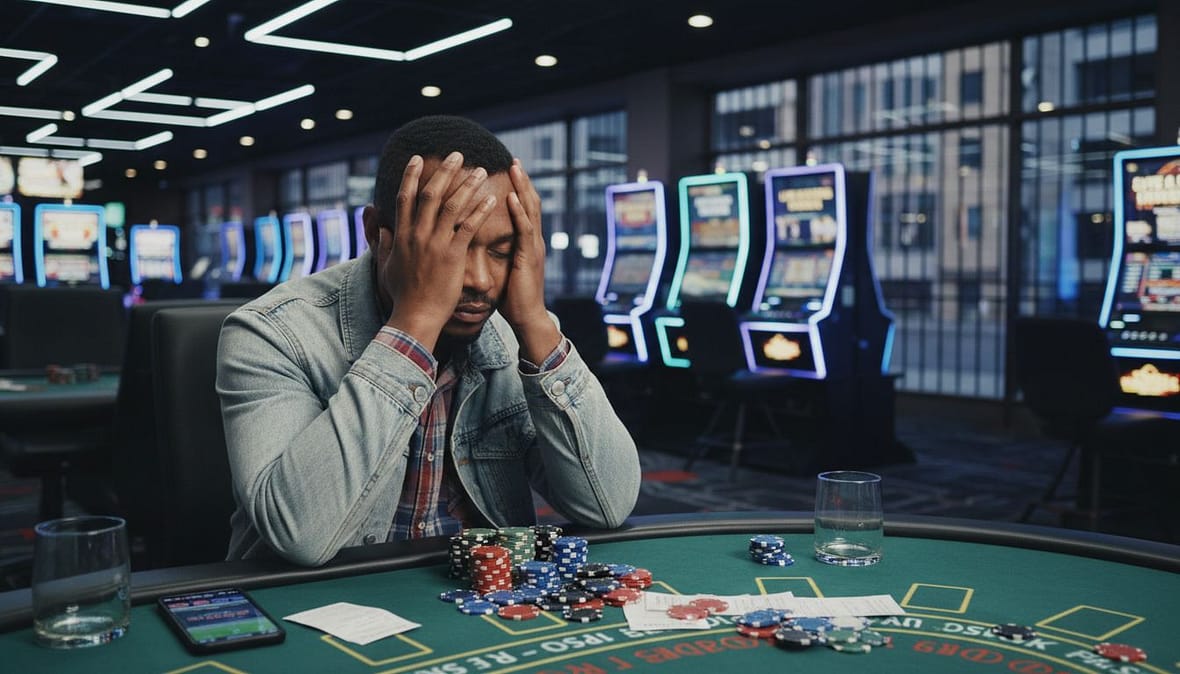
Placing a bet online can quickly shift from entertainment to something more troubling when daily life starts to unravel. Many South African gamblers find themselves caught in a cycle that strains relationships, finances, and emotional wellbeing. This article explores the complex realities of gambling addiction in South Africa, helping you recognise warning signs and understand the support systems available for lasting change.
Table of Contents
- Defining Gambling Addiction In South Africa
- Key Symptoms And Warning Signs
- Main Types And Causes Of Gambling Addiction
- Legal And Social Implications Locally
- Support, Self-Exclusion And Recovery Resources
Key Takeaways
| Point | Details |
|---|---|
| Understanding Gambling Addiction | Gambling addiction is a serious disorder that impairs personal relationships, finances, and overall wellbeing, requiring professional treatment for recovery. |
| Key Characteristics | Signs of gambling addiction include the inability to stop gambling, increasing amounts wagered, and lying about gambling activities. |
| Context in South Africa | South Africa has regulatory measures in place since 1996 to address the societal impact of gambling, recognising the need for balance between commercial interests and public health. |
| Available Support Resources | Several support options are available, including counselling, self-exclusion programmes, and peer support groups to help individuals regain control over their gambling behaviour. |
Defining Gambling Addiction in South Africa
Gambling addiction is not simply enjoying a bet or two. It’s a serious psychological and behavioural disorder that disrupts your personal relationships, finances, and overall wellbeing. In South Africa, this condition is recognised as a multidimensional disorder characterised by pathological gambling behaviours that go far beyond casual play.
Unlike someone who gambles occasionally for entertainment, a person with gambling addiction experiences a compulsive need to gamble despite harmful consequences. The biopsychosocial aspects of addiction show that genetics, psychological factors, and your social environment all contribute to developing this disorder.
Key characteristics of gambling addiction
You might recognise gambling addiction by these signs:
- Inability to stop gambling, even when you want to
- Gambling with increasing amounts of money to achieve the same excitement
- Persistent unsuccessful attempts to cut back or quit
- Feeling restless or irritable when trying to reduce gambling
- Using gambling to escape problems or distressing emotions
- Lying to family members or therapists about the extent of gambling
- Jeopardising relationships, work, or educational opportunities
Gambling addiction affects distinct sub-groups differently. Your age, income level, and personal circumstances shape how the addiction develops and progresses.
The South African context
South Africa introduced protective regulatory measures in 1996 to address gambling’s societal impact. The government recognised that uncontrolled gambling access could lead to widespread addiction, particularly among vulnerable populations. Policy makers have since worked to balance commercial gaming interests with public health concerns.
The distinction between problem gambling and addiction matters. Problem gambling causes disruption but may not involve full loss of control. Addiction, however, means you’ve lost the ability to choose whether you gamble.
Here is a comparison of problem gambling versus gambling addiction in the South African context:
| Aspect | Problem Gambling | Gambling Addiction |
|---|---|---|
| Level of Control | Some ability to choose behaviour | Lost ability to control gambling |
| Impact on Life | Causes disruption but manageable | Severe disruption to all life areas |
| Need for Treatment | May resolve without intervention | Requires professional support |
| Risk of Escalation | Can worsen over time | Already at critical stage |
Why definitions matter in South Africa
Understanding the precise definition helps you identify when casual gambling becomes dangerous. South African healthcare providers and support organisations use these clinical definitions to diagnose and treat affected individuals properly. Your local clinic or counsellor uses these diagnostic criteria to assess your situation accurately.
Pro tip: If you’re concerned about your gambling habits, compare your behaviour against these clinical characteristics rather than dismissing warning signs as normal enjoyment. Early recognition increases your chances of seeking help before addiction deepens.
Key Symptoms and Warning Signs
Gambling addiction doesn’t announce itself loudly. It creeps in gradually, often disguised as harmless entertainment. The earlier you spot the warning signs, the better your chances of seeking help before the addiction takes hold. South African gamblers and their families should learn to recognise these red flags.
Financial warning signs
Money troubles are often the first visible indicator. You might notice:
- Sudden or escalating financial losses that alarm you
- Borrowing money frequently to fund gambling sessions
- Neglecting bills, rent, or essential expenses to gamble
- Selling possessions or taking loans you can’t repay
- Chasing losses by gambling more to recover what you’ve lost
- Hiding bank statements or credit card bills from family members
These patterns intensify rapidly, particularly with online gambling platforms readily available to South African players.
Behavioural and emotional changes
Your behaviour shifts noticeably when addiction develops. Watch for increased secrecy around gambling activities and frequent lying about time spent gambling or money wagered.
Emotional symptoms include:
- Persistent anxiety and depression linked to gambling
- Irritability or restlessness when unable to gamble
- Using gambling as an escape from stress or negative feelings
- Mood swings that others around you notice
The rapid escalation of gambling behaviour occurs faster with online platforms, making early detection critical for South African gamblers.
Social and personal deterioration
Addiction isolates you gradually. You withdraw from friends, family gatherings, and activities you once enjoyed. Work performance suffers, and relationships deteriorate because gambling takes priority.

You might neglect daily responsibilities like household tasks, personal hygiene, or childcare obligations. Family members report increased tension and broken trust.
Recognising obsessive patterns
An obsession with gambling distinguishes addiction from casual play. You spend excessive time planning gambling sessions, obtaining money for betting, or recovering from gambling consequences. Thoughts about gambling dominate your mind constantly.
Pro tip: Ask someone you trust whether they’ve noticed changes in your behaviour, finances, or mood. Outside perspective often reveals warning signs you minimise or deny.
Main Types and Causes of Gambling Addiction
Gambling addiction manifests across different gambling formats, each with distinct characteristics. Understanding which types pose the highest risk helps you recognise vulnerability patterns. South Africa’s diverse gambling landscape means multiple pathways to addiction exist.
Common types of gambling addiction
Different gambling formats create different addiction profiles:
- Casino slot machines: Fast-paced, immediate results, and the illusion of near-miss wins fuel compulsive play
- Online betting: Convenience and 24/7 accessibility intensify problematic behaviour significantly
- Sports wagering: Community atmosphere and prediction-based betting appeal to competitive personalities
- Lottery betting: Regular draws and high-stake prizes attract budget-conscious gamblers seeking quick wealth
Online platforms accelerate addiction development because they remove barriers like travel time and operating hours. You gamble whenever cravings strike, from home or work.
Below is a summary of the main types of gambling addiction and their typical risk features:
| Gambling Format | Typical Risk Factors | Accelerating Factor |
|---|---|---|
| Casino slot machines | Quick results, illusion of control | Frequent near-miss experience |
| Online betting | 24/7 access, anonymity | No travel or time restrictions |
| Sports wagering | Competitive peer environment | Easy mobile betting |
| Lottery betting | Low cost, big prize dreams | Regular draws increase temptation |
Root causes in the South African context
Multiple factors converge to trigger addiction. Socio-economic pressures and accessibility to gambling venues create conditions where risky gambling becomes appealing.
Key causes include:
- Economic hardship and financial desperation driving risky bets
- Psychological predispositions like impulse control disorders
- Cultural and peer influences normalising gambling
- Easy access through both physical casinos and online platforms
- Stress, anxiety, and depression pushing people toward escape mechanisms
Convenience and accessibility dramatically accelerate addiction development among South African gamblers who face persistent economic pressure.
Psychological vulnerability factors
Impulse control disorders significantly heighten addiction risk. People with difficulty regulating behaviour, managing emotions, or resisting temptation are particularly vulnerable. Previous addictions to alcohol, drugs, or other substances indicate heightened susceptibility.
Mental health conditions including depression and anxiety often precede gambling addiction. You might use gambling to self-medicate emotional pain rather than seeking proper treatment.
Societal and economic drivers
South Africa’s economic inequality creates desperation. Unemployed or underemployed individuals view gambling as a potential escape from financial hardship, despite knowing the odds are stacked against them.
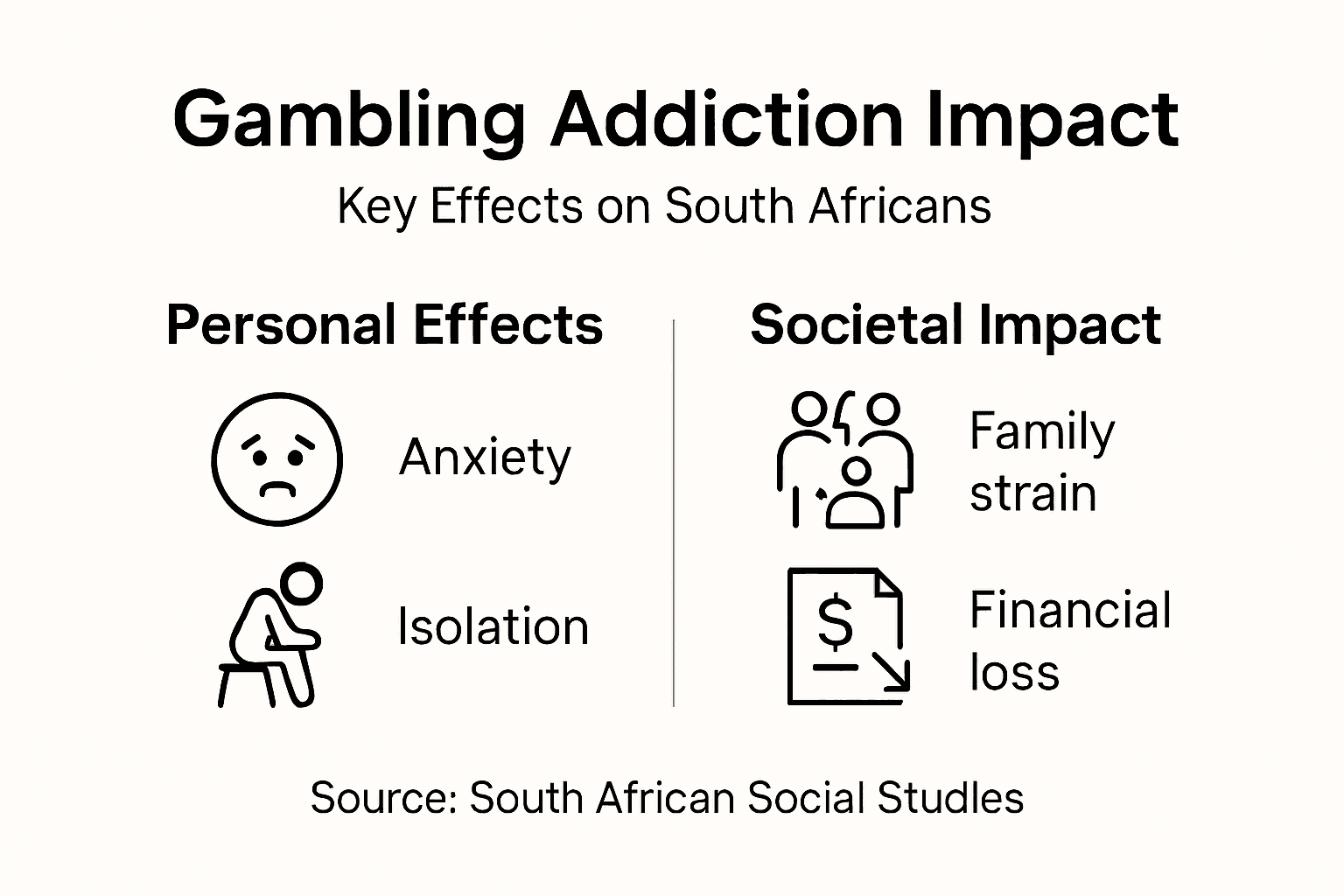
Peer influence matters enormously. Friends gambling regularly normalises the behaviour and removes protective hesitation.
Pro tip: Identify which gambling type appeals most to you and understand why. Recognition of your specific vulnerability helps you avoid those particular platforms and triggers.
Legal and Social Implications Locally
Gambling addiction doesn’t exist in isolation. It triggers a cascade of legal and social consequences that ripple through families, workplaces, and communities across South Africa. Understanding these implications helps you grasp the full scope of addiction’s damage.
Family and relationship breakdown
Addiction devastates families from the inside out. Spouses and children suffer emotional abuse, financial stress, and the trauma of broken trust. Children in addicted households often experience neglect, reduced educational opportunities, and psychological damage lasting into adulthood.
Divorce rates spike among couples where one partner struggles with gambling addiction. Legal battles over custody, property division, and debt create prolonged emotional and financial strain.
Financial and legal consequences
Addiction leads directly to severe financial hardship. Debts accumulate rapidly when gambling depletes savings and drives borrowing. You might face:
- Credit card debt and loan defaults
- Eviction from rental properties
- Loss of family homes to creditors
- Bankruptcy proceedings
- Criminal charges related to theft or fraud committed to fund gambling
Many addicted individuals resort to illegal activities, landing them in courts and prisons. Social harm reduction strategies and improved legal frameworks remain critical gaps in South Africa’s regulatory approach.
Employment and social impact
Work performance suffers as gambling consumes mental and physical energy. Absenteeism increases, productivity drops, and you risk termination. Job loss compounds financial crisis and increases desperation.
Socially, addiction causes isolation. You withdraw from community participation, religious organisations, and friendship networks. The shame surrounding addiction keeps people silent and prevents help-seeking.
Rise of illegal gambling activities
Regulated gambling venues cannot meet all demand. Illegal gambling operations flourish, offering unprotected environments where addiction worsens without safeguards. Illegal sites operate without consumer protections, licensing oversight, or responsible gambling tools.
Unregulated and illegal gambling operations exploit vulnerable South Africans whilst avoiding accountability mechanisms that legitimate operators must follow.
Community-level strain
Addiction strains social services, healthcare systems, and law enforcement. Communities experiencing high addiction rates report increased crime, family violence, and mental health crises requiring intervention resources.
Pro tip: Document how gambling affects your finances, relationships, and work before approaching support services. This evidence strengthens your case for treatment and helps providers understand addiction’s severity in your situation.
Support, Self-Exclusion and Recovery Resources
Recovery from gambling addiction is possible. South Africa has developed support systems, self-exclusion tools, and treatment programmes designed to help you regain control. Knowing what resources exist is your first step toward breaking free.
Professional treatment and counselling
Speaking to a professional makes a real difference. South Africa’s National Responsible Gambling Programme offers access to trained counsellors, psychologists, and addiction specialists across the country.
Treatment options include:
- Individual counselling sessions addressing underlying psychological triggers
- Group therapy where you connect with others facing similar struggles
- Cognitive behavioural therapy helping you change destructive thought patterns
- Family counselling repairing damaged relationships
- Residential rehabilitation programmes for severe cases requiring intensive support
Helplines and counselling services remain strategically positioned to ensure accessibility across South Africa’s diverse communities.
Self-exclusion programmes
Self-exclusion empowers you by blocking your own access to gambling venues and online platforms. This protective tool removes temptation during vulnerable moments when willpower weakens.
How self-exclusion works:
- Contact a gambling operator or join national self-exclusion registries
- Provide your identification and gambling account details
- Specify the duration (typically 6 months to permanently)
- Operators legally restrict your access during the exclusion period
- Most online platforms prevent login and betting attempts
Self-exclusion agreements create legal barriers that enforce your own decision to stop gambling, even when cravings tempt you to restart.
Peer support and community groups
You’re not alone. Peer support groups connect South Africans facing addiction, offering shared experience and practical strategies. These groups meet regularly in communities nationwide, providing confidential spaces to discuss struggles without judgement.
Family support resources
Addiction affects everyone close to you. Family support programmes help spouses, children, and parents understand addiction and protect themselves emotionally. These services acknowledge that recovery involves the entire family system, not just the addicted individual.
Online recovery tools
Digital resources complement traditional treatment. Online support platforms offer anonymous access, financial tracking tools, and educational materials available 24/7. These complement but don’t replace professional help.
Pro tip: Start with a helpline call if face-to-face contact feels intimidating. Speaking anonymously removes shame barriers and connects you with trained advisors who’ve helped countless South Africans recover.
Take Control and Play Safely with Expert Guidance from CasinoBoss
Understanding the deep challenges posed by gambling addiction in South Africa is the first step to protecting yourself and your loved ones. If you recognise warning signs like financial strain, obsessive gambling behaviours, or social withdrawal, it is vital to make informed, responsible choices that prioritise your wellbeing and enjoyment.
Discover safe, licensed, and trustworthy online gambling options at CasinoBoss that value responsible gaming as much as you do. With comprehensive reviews, expert advice, and tips tailored to South African players, CasinoBoss empowers you to enjoy gambling with confidence while avoiding pitfalls associated with addiction. Take control today by exploring our detailed guides, understanding self-exclusion tools, and choosing platforms that support your journey towards balanced play.
Visit CasinoBoss now and join a community committed to safe, secure, and enjoyable gambling experiences in South Africa.
Frequently Asked Questions
What are the signs of gambling addiction?
Gambling addiction can be identified by several key signs, including an inability to stop gambling, increasing amounts of money gambled for the same excitement, persistent unsuccessful attempts to quit, irritability when attempting to reduce gambling, and using gambling as a way to escape distressing emotions.
How does gambling addiction impact personal relationships?
Gambling addiction can severely strain personal relationships, leading to emotional abuse, financial stress, and breakdown of trust. Family members, particularly children, may experience neglect and reduced educational opportunities, while couples may face divorce or legal battles.
What support options are available for gambling addiction?
Support options for gambling addiction include professional treatment and counselling, self-exclusion programmes to limit access to gambling, peer support groups, and family support resources. These services aim to help individuals regain control and address the addiction.
What are the financial consequences of gambling addiction?
Gambling addiction often leads to severe financial hardships, including accumulating debt, defaults on loans, possible eviction, bankruptcy, and engagement in illegal activities to fund gambling. This financial strain exacerbates the challenges faced by individuals struggling with addiction.
Recommended

