


Top 10 Countries Where People Lose the Most Money Gambling

Gambling is one of the world’s most popular leisure activities, from lotteries and sports bets to casinos and online slots. But while some players walk away winners, most lose money in the long run. Where in the world do people lose the most money gambling? This post answers that question with the latest global data, exploring the countries with the highest total gambling losses and why those figures matter.
Whether you’re curious about international gambling behaviour, social policy, or just love data, here’s a comprehensive look at the world’s biggest gambling loss markets.
🌍 What “Gambling Losses” Really Means
When we talk about countries where people lose the most money gambling, we’re referring to total gross losses. That’s the total amount of money players spend on gambling bets minus the winnings returned to them. It includes all legal forms of gambling: casinos, lotteries, sports betting, electronic gaming machines, and more.
Two common ways to measure this are:
- Total Gross Losses: The total dollar amount lost by players across an entire country.
- Per Capita Losses: The average loss per adult — showing how intensely a population engages in gambling relative to size.
In this article, we focus on the total gambling losses because it shows where the biggest gambling markets — and losses — occur. Later, we’ll also touch on per‑person trends.
🏆 Top 10 Countries Where People Lose the Most Money Gambling
Here’s the most recent ranking based on total gambling gross losses:
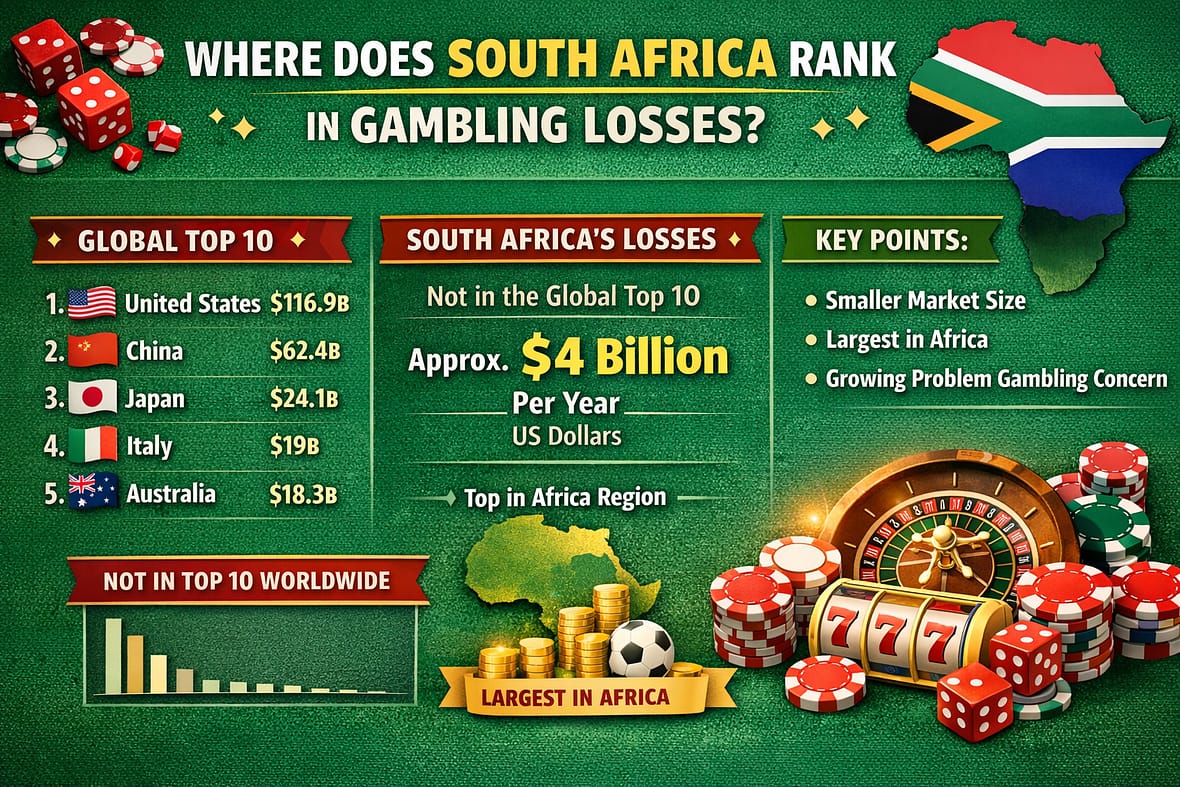
| Rank | Country | Annual Gambling Losses |
|---|---|---|
| 1 | United States | $116.9 billion |
| 2 | China | $62.4 billion |
| 3 | Japan | $24.1 billion |
| 4 | Italy | $19 billion |
| 5 | Australia | $18.3 billion |
| 6 | United Kingdom | $18 billion |
| 7 | Canada | $12.4 billion |
| 8 | Germany | $11.2 billion |
| 9 | France | $10.4 billion |
| 10 | Spain | $8.9 billion |
Let’s break down what this data means and why these countries rank where they do.
1. United States — $116.9 billion
The United States leads by an enormous margin. American gamblers lost an estimated $116.9 billion in 2023, making the USA the largest gambling loss market in the world.
Why losses are so high in the U.S.
- Huge market size: With a large population and widespread access to gambling, especially lottery play, sports betting, and casinos, total losses naturally climb.
- Sports betting expansion: Since 2018, legal sports betting has spread rapidly across states, driving explosive growth in bets placed and money lost.
- Broad variety of gambling products: Lotteries, bingo, slot machines, horse racing, and online casinos all contribute significant loss totals.
2. China — $62.4 billion
Despite most forms of gambling being illegal in mainland China, the country still ranks second in total losses with approximately $62.4 billion.
How can that be?
- State lotteries: China operates two major government lotteries — the Welfare and Sports lotteries — which generate extensive betting volume.
- Macau’s casinos: Macau, a special administrative region, is the world’s largest casino market and a major source of gambling revenue/loss.
- Underground gambling: Illegal betting remains widespread despite strict legal prohibitions.
3. Japan — $24.1 billion
Japan’s gambling laws are strict, but regulated forms of betting like pachinko, racing, and lotteries still produce huge loss figures.
What drives Japan’s losses?
- Pachinko parlours: These machines are ubiquitous and hugely popular across Japan.
- Public races: Betting on horse racing, motorboat racing, and cycling contributes significantly.
- Restricted online gambling: Even with legal limits, aggregate spending remains high.
4. Italy — $19 billion
Italy ranks fourth, with Italian players losing around $19 billion annually.
Cultural and historical context
- Long gambling tradition: Casino culture and gaming machines have been widespread for decades.
- Lottery popularity: National lotteries remain a major source of gambling participation.
- Relaxed regulation: Italy’s pre‑2006 liberalization of gambling contributed to rapid market growth.
5. Australia — $18.3 billion
Australia comes in fifth for total losses, with $18.3 billion lost yearly.
Notable per‑capita impact
Australians are also among the highest losers per adult in the world, largely due to the country’s dense network of poker machines (“pokies”) and heavy sports betting activity.
6. United Kingdom — $18 billion
In the UK, gambling has become deeply integrated into leisure and culture, from online casinos to football betting.
What adds up the losses?
- Online gambling boom: Digital betting platforms now make up a major share of the market.
- Sports betting culture: Betting on football, horse racing, and other sports remains incredibly popular.
7. Canada — $12.4 billion
Canada’s total gambling losses of $12.4 billion come from casinos, lotteries, and betting activities.
Trends to note
- Lottery and machine play: A large share of losses comes from lottery tickets and gaming machines.
- Online market growth: Canada’s online gambling scene continues trending upwards.
8. Germany — $11.2 billion
Germany’s gambling industry is one of Europe’s largest, and annual losses reflect strong participation across gaming machines, sports betting, and lotteries.
9. France — $10.4 billion
French gamblers lose around $10.4 billion annually, with horse racing and national lotteries among the most popular forms.
10. Spain — $8.9 billion
Spain rounds out the top ten with nearly $9 billion in total gambling losses each year.
Gambling in Spain
While lotteries and low‑risk forms of play are common, participation in online betting and casinos has increased rapidly — boosting overall loss figures.
🧠 Why These Countries Lead in Gambling Losses
Several key trends help explain why these nations dominate the list:
🎯 1. Large Populations and Big Markets
Bigger populations naturally generate more gambling activity — and higher aggregate losses. The U.S. and China dominate largely due to size and market scope.
📈 2. Widespread Legal Access
Countries with liberal gambling laws and abundant legal outlets (casinos, lotteries, betting shops, and now online platforms) tend to have higher total losses.
📱 3. Digital Gambling Growth
The explosion of online gambling has dramatically increased accessibility, especially in the U.K., Canada, and Australia.
🏛️ 4. Cultural Normalisation
In some countries, gambling is deeply embedded in social life — from weekend betting to televised sports stakes — which drives higher participation and losses.
💡 Per Capita vs Total Losses: What to Understand
While this list focuses on total dollar losses, per capita figures tell a different story. For example:
- Australia ranks among the highest per person losses in the world.
This means Australians lose more on average relative to population size, even if their total annual losses are lower than the U.S.
Both measures are valuable:
- Total losses show where gambling markets are biggest.
- Per capita losses indicate intensity of gambling culture.
⚠️ The Human Cost of High Gambling Losses
High gambling losses don’t just mean big numbers; they often signal social issues. According to the World Health Organization, gambling harms can include financial distress, relationship breakdowns, and mental health challenges, affecting not only gamblers but also their families and communities.
Studies show a notable portion of the population in many countries struggles with problem gambling, which is closely tied to large aggregate losses.
📌 Final Thoughts
The global landscape of gambling losses reveals fascinating insights into how people gamble — and how much they lose.
- The United States leads in total money lost,
- China and Japan show that legal restrictions don’t eliminate losses,
- And Australia and several European countries highlight the cultural dimensions of gambling behaviour.
Whether you’re exploring this topic for research, policy, or curiosity, understanding where and why people lose the most can help drive informed decisions — from responsible gambling strategies to public health interventions.

