


6 Essential Online Gambling Safety Tips for South Africans


Finding a safe online gambling platform in South Africa can feel intimidating when you see so many websites making big promises. Misjudging where to play risks your money, personal data, and even your privacy. With illegal operators still widespread, one wrong move could leave you unprotected and disappointed.
You deserve to enjoy betting without worrying about scams or misuse of your information. This guide reveals practical steps you can take to spot licensed platforms, check data security, and protect yourself—giving you control over your online gambling experience.
Get ready to discover straightforward checks and smart habits that shield your funds, your details, and your peace of mind every time you play online.
Table of Contents
- Choose Licensed Online Gambling Platforms
- Check Site Security Features and SSL Certificates
- Read Reliable Reviews and Player Feedback
- Protect Your Personal and Financial Information
- Set Limits to Gamble Responsibly
- Understand and Avoid Gambling Scams
Quick Summary
| Key Message | Explanation |
|---|---|
| 1. Always choose licensed gambling sites | Licensed platforms protect you from fraud, ensuring fair gaming and player security through regulation and oversight. |
| 2. Verify site security measures | Check for SSL certificates and encryption to safeguard your personal and financial data from cyber threats. |
| 3. Read independent player reviews | Insights from real players reveal genuine platform experiences, helping to identify issues like delayed payouts or poor customer service. |
| 4. Protect your personal data | Use strong passwords, enable two-factor authentication, and avoid sharing excessive personal information to prevent identity theft. |
| 5. Set responsible gambling limits | Establish clear spending and time limits to ensure gambling remains a safe and enjoyable activity rather than a source of stress. |
1. Choose Licensed Online Gambling Platforms
When you gamble online in South Africa, playing on licensed platforms is your strongest defence against fraud, unfair games, and financial loss. Unlicensed sites operate in legal grey areas, leaving you completely unprotected if something goes wrong.
South Africa regulates online gambling through the National Gambling Act, which establishes a licensing system overseen by the National Gambling Board and provincial authorities. This framework ensures that legal operators meet strict standards for fair play, security, and responsible gambling measures. Licensed platforms undergo regular scrutiny to verify they’re operating legitimately and protecting player funds.
Licensed operators in South Africa are legally required to maintain security standards, fair gaming practices, and player protection measures—unlicensed sites offer you none of these safeguards.
Why does licensing matter for you? Licensed casinos and betting sites must comply with national regulations, which means they face real consequences for misconduct. Unlicensed operators can vanish overnight, taking your winnings and personal data with them. You’ll also notice that licensed betting sites prioritise safety because their business depends on maintaining trust and regulatory approval.
Before signing up anywhere, verify the operator’s licence by checking these details:
- National Gambling Board registration for provincial licensing
- Valid licence number displayed on their website footer
- Provincial authority that issued the licence
- Licence expiry date to confirm it’s currently active
- Operator contact information and physical address in South Africa
Illegal gambling remains widespread across South Africa, but choosing a licensed operator immediately removes this risk. Many illegal sites use sophisticated branding and marketing to look legitimate, so don’t rely on appearance alone.
You can cross-reference any site’s licence details directly with regulatory bodies. This takes just a few minutes and protects you from scams that target thousands of South African players annually. Licensed platforms also contribute to regulated revenues that fund public services, so your choice supports legitimate industry growth.
An unlicensed platform might offer impressive bonuses to attract players, but these promises disappear when disputes arise. Licensed operators, by contrast, must maintain transparent terms and resolve complaints through formal procedures because their licence depends on it.
Pro tip: Bookmark the National Gambling Board’s contact details and licensing register so you can quickly verify any new gambling site before you deposit money.
2. Check Site Security Features and SSL Certificates
A gambling site’s security features are your digital locks against hackers, identity theft, and financial fraud. Before you enter any personal or payment information, you need to verify that the platform uses encryption technology to protect your data.
SSL (Secure Sockets Layer) certificates are the foundation of safe online transactions. When a site has SSL protection, all information travelling between your device and their servers gets encrypted, making it unreadable to cybercriminals. This is why you’ll see a padlock icon next to the website address in your browser.
An SSL certificate transforms your sensitive data into code that only the gambling site can decode—without it, your information travels unencrypted across the internet.
Look for these specific security indicators before entering your details:
- Padlock icon in the address bar (left side of the URL)
- “https://” prefix instead of just “http://” in the website address
- Green or secure indicator displayed prominently in your browser
- Security certificate details visible when you click the padlock
- Site seal badges from trusted security providers like Norton or McAfee
Many South African players ignore these warning signs and proceed anyway, assuming the site looks trustworthy. That’s precisely how scammers operate—they copy legitimate designs but skip the security infrastructure. A professional-looking website means nothing if it lacks proper encryption.
When verifying gambling site safety, checking SSL certificates is one of the quickest security checks you can perform. It takes seconds but protects your banking details, email address, and personal identification information from interception.
Scammers create fake gambling sites that look identical to legitimate ones but lack SSL protection. Your browser will alert you if a site doesn’t have proper security, though some players ignore these warnings. Don’t be that player—if your browser warns you, exit immediately.
Different levels of SSL certificates exist. Look for at least a domain-validated certificate, which confirms the site actually owns that web address. Extended validation certificates provide even stronger assurance and display the operator’s name in the certificate details.
Check the certificate expiry date as well. An expired SSL certificate is a red flag that the operator isn’t maintaining their security infrastructure properly. Legitimate gambling sites renew their certificates before they expire because this affects player trust and search engine rankings.
Pro tip: Click the padlock icon on any gambling site’s address bar to view the full security certificate details, including the operator’s registered name and certificate expiry date—this gives you proof that the site is who they claim to be.
3. Read Reliable Reviews and Player Feedback
Player reviews and feedback are your window into what actually happens at a gambling site when real people play there. Before depositing money, read what other South African players have experienced with payouts, customer service, and overall fairness.
Real player feedback reveals patterns that marketing claims never will. If dozens of players complain about withdrawal delays or missing winnings, that’s a serious warning sign. Conversely, consistently positive experiences across multiple review sources indicate a trustworthy platform.
Player reviews uncover hidden problems that licensing documents alone cannot reveal—they show you what genuinely happens when money is on the line.
South African regulators emphasise the importance of consumer feedback when assessing platform reliability and avoiding fraudulent operations. Reading reviews helps you identify platforms with genuine issues before they affect your account.
Where should you look for trustworthy reviews? Focus on these sources:
- Independent review sites run by gambling experts, not casino operators
- Player forums and communities where South Africans discuss their experiences
- Regulatory body complaints filed against specific platforms
- Online gambling communities on Reddit or local South African gambling groups
- Casino comparison websites that compile verified player feedback
Be cautious with reviews posted directly on casino websites. These are typically filtered to show only positive feedback and exclude legitimate complaints. The most valuable reviews come from independent sources where players can speak freely without censorship.
Look for reliable casino reviews that discuss specific experiences like withdrawal speed, bonus terms, and how customer service handles disputes. Generic praise like “great site, highly recommend” offers little insight compared to detailed accounts of actual gameplay.
Scammers create fake reviews to manipulate your decision. Watch for reviews that sound overly promotional or lack specific details about actual gameplay. Real players describe actual experiences with specific games, bonus conditions, and withdrawal processes.
Read both positive and negative reviews with equal attention. A site with zero negative reviews is suspicious—every platform has some unhappy players. What matters is whether complaints are addressed reasonably or ignored by management.
Check the review dates too. Old reviews may no longer reflect current operations, especially if ownership or management has changed. Recent reviews from the last few months give you the most relevant picture of how a site operates today.
Payment issues and customer support problems appear repeatedly in negative reviews across South African gambling forums. If multiple players report the same problems with withdrawal delays or unresponsive support, that pattern indicates a genuine operational issue.
Pro tip: Search for the site’s name plus “scam” or “complaint” on Google and South African gambling forums—if serious issues exist, you’ll find documented evidence from affected players within the first few search results.
4. Protect Your Personal and Financial Information
Your personal and financial data are your most valuable assets when gambling online. Hackers and scammers specifically target gambling accounts because they contain banking details, identity documents, and payment information all in one place.
South Africa’s Protection of Personal Information Act (POPIA) sets strict legal requirements for how gambling operators must handle your data. Licensed operators must collect information lawfully, protect it from unauthorised access, and use it only for stated purposes. This legal framework protects you against identity theft and financial fraud.
Operators handling your data must comply with POPIA or face serious penalties—your data protection is legally enforceable, not optional.
When you sign up at a gambling site, you’ll provide your full name, email address, phone number, and banking details. Never share more information than necessary, and always question why a site needs specific details before providing them.
Protect your data by following these essential practices:
- Use strong, unique passwords for your gambling account that you don’t use elsewhere
- Enable two-factor authentication if the site offers it as an extra security layer
- Avoid public Wi-Fi networks when accessing your gambling account or making deposits
- Never share your login details with anyone, including customer support staff
- Check your account statements regularly for unauthorised transactions
- Use a password manager to generate and store complex passwords securely
Many South African players reuse passwords across multiple sites, which means one compromised password exposes all their accounts. A strong password uses upper and lower case letters, numbers, and symbols to resist cracking attempts.
Data security in betting platforms protects you from account takeovers and financial fraud. Legitimate operators invest in security infrastructure because protecting player data is fundamental to their business reputation and legal compliance.
If a gambling site asks for unusual information like your mother’s maiden name or your social security number, be sceptical. Scam operators often request excessive personal data to build fake profiles for money laundering or identity theft.
Never respond to emails or messages claiming to be from a gambling site asking you to “verify your account” by providing passwords or banking details. This is a classic phishing scam targeting gambling accounts.
When making deposits, use payment methods that offer buyer protection. Credit cards and e-wallets like Skrill provide dispute resolution if fraudulent charges appear on your account. Direct bank transfers offer less protection if something goes wrong.
Pro tip: Create a separate email address exclusively for gambling accounts, use a unique strong password, and enable two-factor authentication—this isolates your gambling activity from other accounts and prevents a single breach from compromising your entire digital life.
5. Set Limits to Gamble Responsibly
Setting limits before you start gambling is like putting a fence around your budget. You decide in advance how much you’ll spend, how long you’ll play, and when you’ll stop, regardless of whether you’re winning or losing.
Responsible gambling means treating betting as entertainment, not as a way to make money or solve financial problems. Licensed operators in South Africa are required to provide tools that help you stay in control of your gambling behaviour.
Setting limits transforms gambling from a risky activity into a controlled recreational choice that fits within your personal financial boundaries.
Regulatory policies across South Africa encourage operators to offer deposit limits, session time limits, and reality checks. These tools are freely available on licensed platforms because they reduce gambling harm and keep the industry sustainable.
The most important limits to set are:
- Deposit limits restricting how much money you can add to your account daily, weekly, or monthly
- Loss limits capping the maximum amount you’re willing to lose in a specific timeframe
- Session time limits automatically logging you out after a set duration to prevent excessive play
- Bet size limits controlling the maximum wager you can place on individual games
- Reality checks reminding you how long you’ve been playing and how much you’ve spent
Many players ignore these tools, thinking they won’t need them. That’s when gambling shifts from fun to financial stress. Setting limits upfront protects you when you’re emotional or caught up in the moment.
Setting betting limits safeguards your play by preventing impulsive decisions during losing streaks. When you hit your limit, the system stops you from depositing more money, regardless of how tempted you feel.
Start with conservative limits that feel comfortable. A common approach is setting your deposit limit to what you’d spend on a night out or entertainment for the month. Never set limits higher than you can afford to lose completely.
If you find yourself regularly reaching your limits or wanting to increase them, that’s a warning sign. It suggests gambling may be becoming problematic rather than recreational. Some people benefit from taking a break or seeking support.
Most licensed platforms allow you to change or remove limits, but they typically enforce waiting periods (like 24 hours) before changes take effect. This delay prevents you from impulsively increasing limits during a losing session.
Use reality checks actively. These notifications tell you how long you’ve been playing and your current balance. Many players are shocked when they realise they’ve been gambling for three hours straight.
Pro tip: Set your initial deposit limit to match your monthly entertainment budget, enable session time limits of 60 to 90 minutes, and activate reality check notifications every 30 minutes to maintain awareness and control.
6. Understand and Avoid Gambling Scams
Gambling scams are designed by criminals specifically to steal your money, personal information, or both. Understanding how these scams work is your best defence against becoming a victim of fraud targeting South African players.
Unregulated and illegal gambling platforms operate without oversight, meaning they can refuse payouts, manipulate game outcomes, or disappear overnight with your funds. Without licensing, you have zero legal recourse if something goes wrong.
Scammers create fake gambling sites that look identical to legitimate ones, but lack proper licensing, security infrastructure, and player protections—one wrong click can cost you everything.
Common scams targeting South African gamblers include rigged games that are programmed never to pay out, false bonuses designed to trap your deposits in impossible wagering requirements, and malware-infected sites that steal your banking details.
Watch out for these warning signs:
- No valid licence information displayed on the website or inability to verify with regulators
- Unsolicited offers promising guaranteed wins or unrealistic returns on your money
- Pressure to deposit immediately using urgent language like “limited time offer”
- Poor website quality with spelling errors, broken links, or unprofessional design
- Requests for unusual payment methods like wire transfers or cryptocurrency that can’t be reversed
- No working customer support or support that ignores complaints about missing winnings
- Fake bonus terms with impossibly high wagering requirements designed to trap your money
Identity theft is another serious risk. Scam operators collect your personal information, then use it for money laundering, fraudulent accounts, or selling your data to other criminals. This creates problems long after you stop gambling.
Understanding how to prevent online gambling fraud involves recognising these patterns and taking action early. If something feels suspicious about a site, trust your instinct and leave immediately.
Never click links in unsolicited emails or text messages claiming to be from gambling sites. Criminals use phishing scams to direct you to fake login pages where they capture your username and password.
Account takeover is increasingly common. Hackers gain access to your gambling account and withdraw funds or change your email address, locking you out. Strong, unique passwords and two-factor authentication prevent most takeovers.
Scammers specifically target South African players because they know many are new to online gambling and may not recognise fraud tactics. They’ll copy legitimate site designs, steal customer testimonials, and create fake reviews to build false credibility.
If you suspect you’ve been scammed, report it immediately to the National Gambling Board and your bank. Document everything including emails, screenshots, and transaction records. Your quick action helps authorities shut down these operations and prevents others from being victimised.
Pro tip: Before depositing at any gambling site, search for its name plus “scam” or “complaint” on Google and South African forums—if serious fraud reports appear, avoid the site completely and report it to regulators.
Below is a comprehensive table summarising the six key strategies for safe and responsible online gambling, as discussed in the provided article.
| Strategy | Description | Key Actions | Benefits |
|---|---|---|---|
| Choose Licensed Platforms | Opt for platforms with valid licences to ensure regulated operations and financial security. | Verify National Gambling Board registration, check licence information, and use official registries. | Protects against fraud and supports a lawful industry. |
| Verify Site Security Measures | Ensure the site’s security features are sufficient to safeguard personal and payment information. | Look for SSL certificate indications like padlock icons and “https://” URLs; check certificate details. | Protects against identity theft and financial fraud. |
| Check Reviews and Feedback | Use player reviews to assess a site’s reliability and discover genuine issues faced by users. | Consult independent reviews, forums, and regulatory body complaints; carefully evaluate review authenticity. | Offers real-world insights into the platform’s trustworthiness. |
| Safeguard Personal Information | Implement data security habits to prevent unauthorised access to your gambling account and sensitive information. | Use strong, unique passwords, enable two-factor authentication, avoid sharing login details, and monitor transactions. | Secures personal and financial information from breaches and fraud. |
| Establish Gambling Limits | Set personal limits on spending, playtime, and betting to maintain control over your gambling habits. | Configure deposit, loss, session, and bet limits; utilise reality check notifications. | Encourages responsible gambling and helps avoid financial or emotional stress. |
| Avoid Gambling Scams | Be aware of fraud indicators and take necessary precautions to prevent falling victim to scams. | Identify signs of unlicensed sites, distrust unsolicited offers, and verify sites through research. | Reduces risk of financial loss and identity theft. |
Secure Your Online Gambling Journey with Trusted Guidance
Navigating the online gambling world in South Africa can be daunting when faced with risks like unlicensed platforms, security threats, and scams. The article highlights crucial challenges such as verifying licences, recognising safe SSL certificates, and protecting your personal and financial information. South African players seek safety, reliability, and peace of mind to enjoy gambling responsibly without fear of fraud or data breaches.
Casinoboss.co.za specialises in addressing these concerns by offering expert reviews and detailed comparisons of only licensed and secure gambling platforms. We prioritise transparency about operator licences, security protocols, and customer feedback to empower you with the knowledge needed to avoid scams and make informed choices. From practical advice on setting betting limits to uncovering trustworthy bonuses, our content shapes a confident gambling experience.
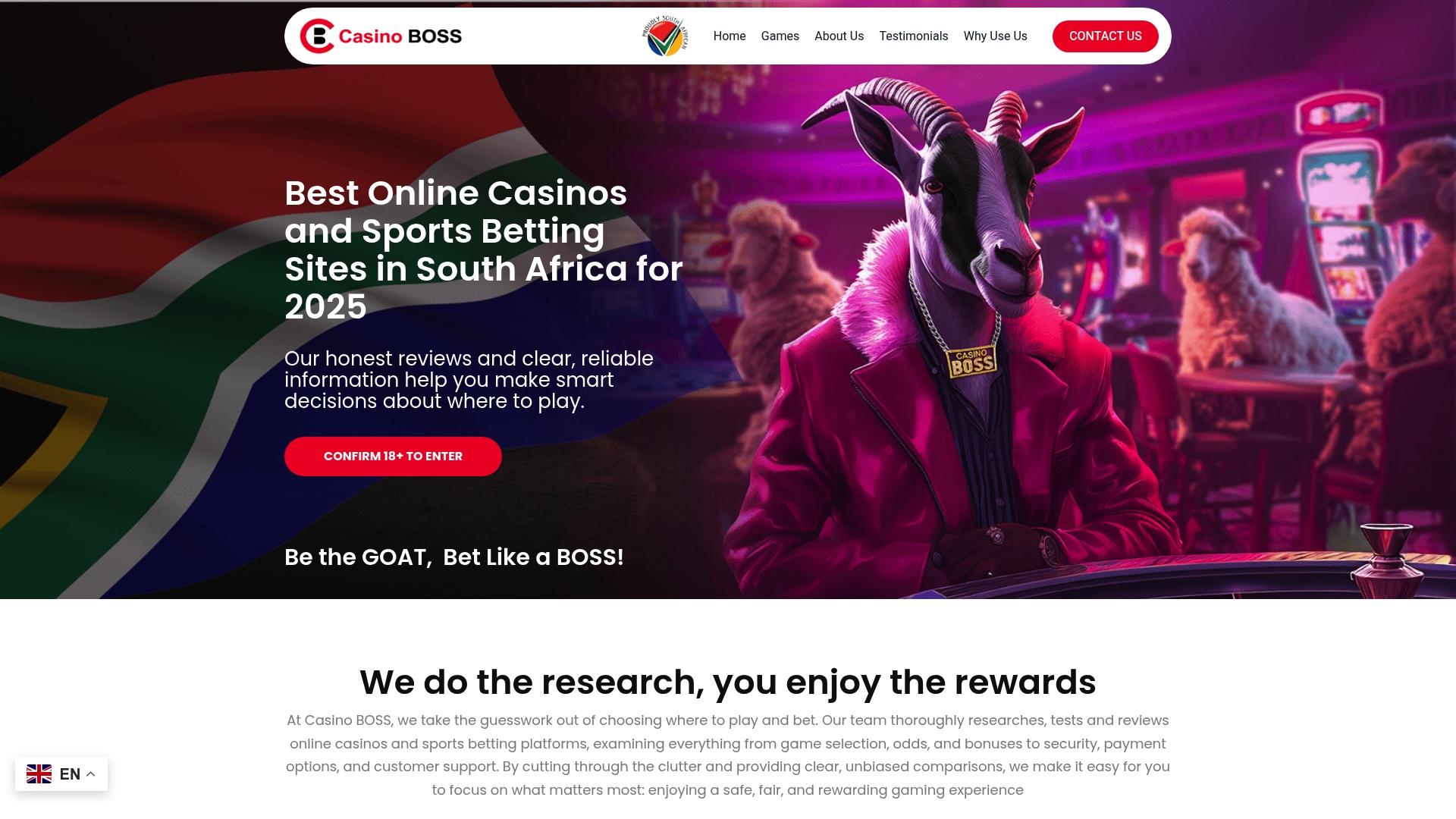
Discover your safest options now at Casinoboss and explore our expert insights on data security and responsible gambling practices. Don’t risk your funds and personal information—trust our authoritative guidance from George the GOAT and step into a protected, rewarding betting journey today.
Frequently Asked Questions
How can I verify if an online gambling site is licensed in South Africa?
To verify if an online gambling site is licensed in South Africa, check for the National Gambling Board registration and look for a valid licence number displayed on the website. You can also confirm the provincial authority that issued the licence and check the licence expiry date.
What security features should I look for on a gambling site?
Look for sites that use Secure Sockets Layer (SSL) certificates, indicated by a padlock icon in the address bar and a URL beginning with ‘https://’. Ensure the site displays security certificate details when you click the padlock icon to verify its authenticity.
Why is it important to read player reviews before gambling online?
Reading player reviews is crucial as they reveal real experiences related to payouts, customer service, and fairness at a gambling site. Focus on independent review sources to uncover any patterns of issues that may impact your decision.
What should I do to protect my personal information while gambling online?
Protect your personal information by using strong, unique passwords and enabling two-factor authentication when available. Regularly check your account statements for unauthorised transactions to ensure your data has not been compromised.
How can I set responsible gambling limits on an online site?
Most online gambling sites offer tools to set responsible gambling limits, such as daily deposit limits and session time limits. Review these options and set your initial deposit limit to an amount you’re comfortable losing, perhaps matching your monthly entertainment budget.
What are some common scams to watch out for in online gambling?
Common scams include unlicensed sites that refuse payouts, offers promising guaranteed wins, and phishing attacks disguised as official communications. Stay vigilant by checking for valid licence information and being wary of unsolicited offers or unusual payment methods.
Recommended

