


Master betting budget management for safer SA gambling


Managing your betting budget effectively is the difference between sustainable entertainment and financial stress. Many South African online gamblers struggle with overspending, chasing losses, and depleting funds faster than intended. This step-by-step guide provides practical strategies to set realistic budgets, allocate stakes wisely, enforce limits, and track progress for responsible gambling that protects your finances whilst maximising enjoyment.
Table of Contents
- Prerequisites: What You Need Before Starting
- Step 1: Define Your Betting Budget
- Step 2: Allocate Your Bankroll Wisely
- Step 3: Set Practical Limits Within Your Budget
- Step 4: Track Your Budget And Adjust
- Common Mistakes And Troubleshooting
- Expected Results And Outcomes
- Alternative Budgeting Approaches And Tradeoffs
- Discover Safe Gambling Options With Casino Boss
- Frequently Asked Questions
Key takeaways
| Point | Details |
|---|---|
| Fixed budgets prevent overspending | Setting firm spending limits based on disposable income reduces financial risk significantly. |
| Small stake allocation extends play | Dividing bankroll into 1-5% bets per wager maximises longevity and minimises rapid losses. |
| Daily limits protect funds | Implementing strict loss caps and session time limits safeguards your bankroll from impulsive decisions. |
| Regular tracking enables adjustment | Monitoring betting activity weekly allows timely budget modifications based on performance patterns. |
| Avoid chasing losses | Stopping play after reaching preset limits maintains control and prevents destructive betting behaviour. |
Prerequisites: what you need before starting
Before implementing any budget management strategy, you need solid foundations. Proper preparation ensures your betting activities remain enjoyable rather than destructive to your financial wellbeing.
First, separate your disposable income from essential living expenses. Only money you can afford to lose without impacting rent, food, transport, or savings should enter your betting budget. This creates a protective barrier between entertainment spending and financial obligations.
Next, define your personal gambling goals and risk tolerance. Are you betting purely for entertainment, seeking supplementary income, or testing strategies? Your objectives directly influence budget size and stake allocation. Someone betting for fun accepts smaller returns than someone pursuing profit, which affects how aggressively they manage funds.
You’ll also need tracking tools. Budgeting apps designed for gambling, spreadsheet templates, or simple manual journals all work. The method matters less than consistency. Choose whatever system you’ll actually use daily without frustration.
Finally, understand gambling regulation in South Africa and leverage available protection tools. Licensed platforms offer self-exclusion features, deposit limits, and reality checks. Understanding South African gambling regulations enables better use of self-exclusion and limit tools. Familiarise yourself with these safeguards before placing your first bet under your new budget system.
Step 1: define your betting budget
Your betting budget forms the cornerstone of responsible gambling. Without clear financial boundaries, even disciplined players drift into overspending territory.
Start by calculating your true disposable income after all essential expenses, savings contributions, and emergency fund allocations. A conservative approach recommends allocating no more than 5% of this amount monthly for gambling activities. Someone with R10,000 disposable income monthly should cap betting at R500.
This budget must account for entertainment value rather than expected returns. Treat every rand as already spent the moment it enters your betting account. This psychological shift prevents the dangerous mindset that gambling funds are investments rather than entertainment costs.
Create a personal contract with yourself. Write down your monthly limit, sign it, and review it before every betting session. This tangible commitment strengthens resolve when temptation strikes. Many successful budget managers keep this contract visible near their computer or phone.
Never mix betting funds with essential finances. Open a separate bank account or e-wallet exclusively for gambling if possible. This physical separation makes overspending immediately obvious and creates friction that prevents impulsive deposits during losing streaks.
For guidance on maintaining these boundaries, explore responsible gambling guidance South Africa resources. Understanding betting strategy guide South Africa principles helps align your budget with realistic expectations. Learning why set betting limits strengthens commitment to your financial boundaries.
Pro Tip: Review and adjust your budget quarterly rather than monthly. Quarterly reviews reduce the temptation to increase limits after lucky winning streaks whilst providing enough time to spot genuine changes in financial circumstances.
Step 2: allocate your bankroll wisely
Once you’ve established your total budget, smart allocation extends playing time and controls risk exposure. Poor stake sizing destroys bankrolls faster than unlucky streaks.
Divide your total bankroll into smaller betting units of 1-5% per wager. Someone with a R500 monthly budget should bet R5-R25 per session depending on game volatility and confidence level. This approach provides 20-100 betting opportunities before depletion, dramatically reducing the chance of losing everything in one session.
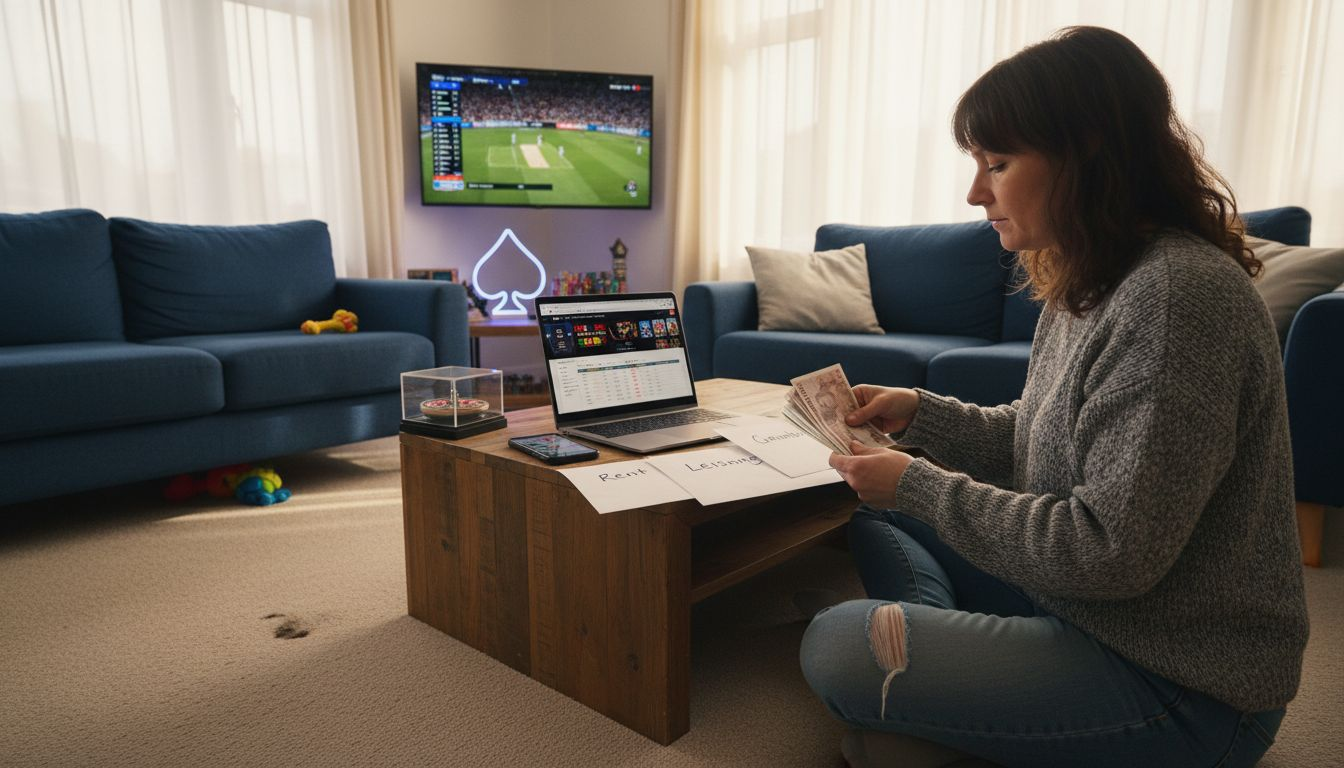
Adjust bet size based on game type and personal risk assessment. High volatility slots or accumulator bets warrant smaller stakes of 1-2% due to their all-or-nothing nature. Lower volatility games like European roulette or simple sports bets can accommodate 3-5% stakes whilst maintaining safety margins.
Avoid placing large portions of your bankroll on single high-risk bets, regardless of how confident you feel. Even professional gamblers with deep statistical analysis rarely stake more than 5% on individual wagers. Your budget lacks the depth to absorb such concentrated risks without severe consequences.
Maintain an emergency buffer fund within your bankroll. Reserve 10-15% as untouchable except for genuine value opportunities that meet strict criteria you’ve defined in advance. This buffer prevents desperate end-of-month betting when funds run low.
For comprehensive allocation strategies, review the betting strategy guide South Africa which details risk-adjusted stake sizing for various gambling formats.
Pro Tip: Start with 1% stakes during your first month regardless of budget size. This ultra-conservative approach lets you test your discipline and tracking systems without significant financial exposure whilst you learn your betting patterns.
Step 3: set practical limits within your budget
Limits transform abstract budgets into concrete protective barriers. Without them, even well-planned budgets crumble under emotional pressure during losing streaks.
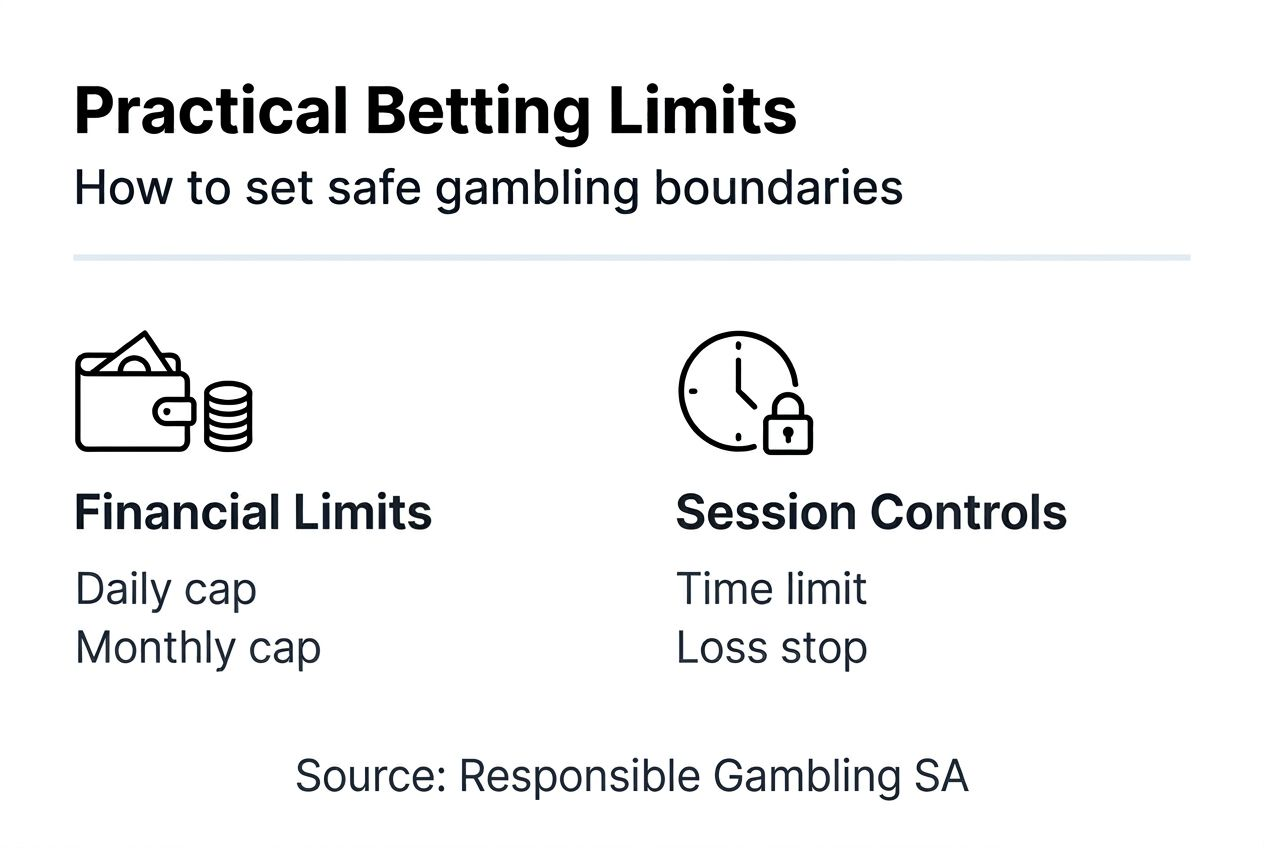
Implement strict daily loss caps to prevent catastrophic sessions. A reasonable daily limit sits at 20-25% of your total monthly budget. Someone with R500 monthly should stop at R100-R125 daily losses regardless of circumstances. This ensures no single day destroys your entire month’s entertainment.
Set session time limits independent of financial performance. Gambling fatigue impairs judgment as severely as alcohol. Limit continuous play to 60-90 minutes maximum, then take mandatory 30-minute breaks. Extended sessions lead to poor decisions even when winning, as tired minds chase bigger victories or attempt to recoup minor losses.
Daily loss limits and session caps help prevent excessive financial risk and gambling fatigue. Use platform self-exclusion tools immediately when limits are breached. Many licensed South African platforms offer 24-hour cooling-off periods or longer exclusions. Activate these without shame when you hit predetermined thresholds.
Regularly review and adjust limits based on actual performance patterns. If you consistently hit daily limits within the first week of each month, your limits may be too generous or your stake sizing needs reduction. Conversely, if you never approach limits, they’re not providing meaningful guidance.
Detailed information on setting betting limits helps establish boundaries appropriate for your circumstances and risk profile.
Step 4: track your budget and adjust
Tracking transforms budget management from hopeful intention into measurable reality. Without data, you’re gambling blind on both game outcomes and financial management.
Use dedicated tracking tools consistently. Mobile apps like gambling-specific budget trackers or general finance apps with custom categories work well. Alternatively, maintain a simple spreadsheet with columns for date, game type, stake size, outcome, and running balance. Manual journals work too if you’re disciplined enough to record every single bet immediately.
Establish a regular review schedule. Weekly reviews catch problems before they escalate. Monthly reviews identify longer-term patterns and inform budget adjustments. Record these insights formally rather than relying on memory.
Adjust budgets according to tracked performance and changing financial circumstances. If tracked data shows consistent small losses within acceptable limits and your income increased, a modest budget increase may be justified. Conversely, if losses exceed projections or financial circumstances tighten, reduce budgets immediately without guilt.
Maintain discipline through consistent monitoring habits. Check your tracking system before, during, and after each gambling session. This triple-check approach prevents the common mistake of forgetting mid-session bets that push you over limits.
Tracking method comparison:
| Method | Setup time | Daily effort | Accuracy | Cost |
|---|---|---|---|---|
| Mobile apps | 15 minutes | 2-3 minutes | High | Free-R50/month |
| Spreadsheets | 30 minutes | 3-5 minutes | High | Free |
| Manual journal | 5 minutes | 5-10 minutes | Medium | R20-R50 |
| Bank statements | None | 15 minutes weekly | Low | Free |
Explore responsible gambling South Africa 2026 resources for additional tracking tools and accountability strategies.
Common mistakes and troubleshooting
Even well-intentioned gamblers make predictable errors that undermine budget management. Recognising these pitfalls helps you avoid or correct them quickly.
Chasing losses represents the most destructive mistake. When you hit your daily loss limit, stop immediately regardless of how “due” you feel for a win. Probability doesn’t care about your recent losses. Each bet carries the same house edge whether you’re up or down. The urge to chase intensifies precisely when you should stop.
Neglecting to track every bet creates dangerous blind spots. Missing just a few small bets per session compounds into significant unaccounted spending monthly. If tracking feels tedious, your system is too complicated. Simplify until logging bets takes under 30 seconds.
Ignoring preset limits causes rapid bankroll destruction. When you established those limits, you were rational and clearheaded. Mid-session, emotions cloud judgment. Trust your prepared self over your emotional self. Set phone alerts for approaching limits so you can’t claim you forgot.
Overestimating disposable income leads to reckless budget setting. Be brutally honest about what you can afford to lose. A budget that causes financial stress defeats the entire purpose of managed gambling. Better to set a conservative budget and occasionally increase it than set an aggressive budget you can’t maintain.
“The difference between gambling for entertainment and gambling addiction often comes down to whether you respect your own limits. Budget management isn’t about restricting fun, it’s about ensuring you can keep having fun next month and the month after.” — Responsible Gambling South Africa Guidelines
Expected results and outcomes
Consistent application of these budget management principles delivers measurable improvements over time. Understanding realistic timelines prevents premature discouragement.
Expect to achieve improved budget control within approximately three months of consistent application. The first month focuses on learning your patterns and adjusting systems. The second month tests your discipline as novelty wears off. By month three, habits solidify and benefits become apparent.
You’ll experience higher satisfaction and confidence in betting activities. Knowing you’re gambling within safe boundaries removes the background anxiety that plagues uncontrolled betting. This mental shift often improves decision-making quality, creating a positive feedback loop.
Notice significant reduction in impulsive and chase betting behaviours. When limits are clear and tracked, the temptation to make “just one more bet” diminishes. Your brain adapts to the structure, making disciplined behaviour progressively easier.
Your gambling activities align with responsible gambling principles, promoting sustainable long-term participation. Instead of boom-bust cycles that end in self-exclusion or financial crisis, you maintain steady, controlled engagement that remains genuinely entertaining.
Alternative budgeting approaches and tradeoffs
Whilst the percentage-based fixed limit approach suits most gamblers, alternative methods offer different advantages depending on your experience and preferences.
Fixed limit budgeting provides simplicity and ease of enforcement. You set one number monthly, never exceed it, and track against it. This approach works brilliantly for beginners or those who struggle with discipline. However, it lacks flexibility when your financial circumstances change mid-month or when you hit an extended winning streak that could justify modest increases.
Proportional betting adjusts stakes based on current bankroll size rather than fixed amounts. When your bankroll grows through winnings, bet sizes increase slightly. When it shrinks, bets decrease automatically. This dynamic approach extends bankroll longevity considerably but requires stronger discipline to recalculate stakes regularly and resist the temptation to bet larger amounts just because funds are temporarily available.
Budget approach comparison:
| Approach | Complexity | Discipline required | Flexibility | Best for |
|---|---|---|---|---|
| Fixed limit | Low | Medium | Low | Beginners, strict budgeters |
| Proportional | Medium | High | High | Experienced gamblers |
| Hybrid | Medium | Medium | Medium | Most situations |
New or low-risk gamblers benefit most from fixed limits. The predictability removes decision-making burden and prevents rationalisations for exceeding budgets. Experienced gamblers with naturally varying bankrolls might prefer proportional approaches that acknowledge winning and losing cycles whilst maintaining percentage-based safety.
Consider starting with fixed limits for your first three to six months, then experimenting with proportional methods once you’ve established strong tracking habits and proven your discipline.
Discover safe gambling options with Casino Boss
Applying these budget management strategies requires trusted platforms and ongoing education. Casino Boss provides comprehensive resources supporting safe, enjoyable gambling experiences tailored for South African players.

Our detailed guides align perfectly with the responsible betting principles covered here. Whether you’re implementing your first budget or refining existing strategies, Casino Boss offers expert advice, platform reviews, and practical tools. Explore our step by step betting guide safe success for complementary strategies that enhance your budget management approach.
Access extensive responsible gambling resources including self-assessment tools, limit calculators, and crisis support contacts. Browse our curated selection of online slots options from licensed operators offering robust budget protection features. Casino Boss exists to ensure South African gamblers enjoy safe, informed, and sustainable betting experiences.
Frequently asked questions
What is the best percentage of disposable income to allocate as a betting budget?
Financial experts recommend allocating no more than 5% of your monthly disposable income exclusively for gambling activities. This conservative threshold ensures betting remains entertainment rather than financial necessity, protecting essential expenses and savings. Someone with R10,000 disposable income monthly should cap gambling at R500, whilst someone with R3,000 disposable might allocate R150 maximum.
How can I track my betting spend most effectively?
Use dedicated gambling budget tracking apps that automatically categorise transactions and provide real-time balance updates. Alternatively, maintain a detailed betting journal recording every wager, outcome, stake size, and running balance immediately after each bet. Weekly reviews of this data help identify problematic patterns early whilst monthly summaries inform necessary budget adjustments for sustained discipline.
What should I do if I keep chasing losses despite my budget?
Recognise loss chasing as harmful behaviour indicating potential problem gambling requiring immediate intervention. Activate strict loss limits through platform tools and implement mandatory 24-48 hour cooling-off periods after hitting daily caps. Seek professional support through responsible gambling organisations and consider voluntary self-exclusion if the pattern persists despite implemented safeguards.
Should I increase my budget after a winning streak?
Temporary winning streaks don’t justify permanent budget increases. Gambling outcomes involve significant variance and short-term wins often reverse. Only increase budgets when your underlying financial situation genuinely improves through non-gambling income growth or reduced expenses. Even then, maintain the 5% disposable income threshold and implement the increase gradually over several months rather than immediately.
How do I explain my betting budget to family members?
Frame your budget as responsible entertainment spending comparable to dining out, cinema visits, or hobbies. Present your tracking data demonstrating consistent adherence to limits and lack of financial impact on household obligations. Transparency builds trust whilst showing your disciplined approach reassures concerned family members that gambling remains controlled entertainment rather than problematic behaviour.
Recommended

