


Licensed Betting Sites: Why Safety Matters in SA


Confused about which online betting sites in South Africa are actually safe and legal? Sorting through local and offshore options can feel overwhelming, especially when every platform claims to be secure. Understanding the real meaning of a licensed betting site is your best defense against scams and risky operators. This guide breaks down what licensing really means, how it protects your money, and why choosing approved local sites leads to a safer, more rewarding betting experience.
Table of Contents
- Licensed Betting Sites Defined And Misconceptions
- Types Of Legal Betting Platforms In South Africa
- How Licensing Ensures Safety And Fairness
- South Africa’s Gambling Laws And Compliance
- Risks Of Using Unlicensed Betting Sites
- Comparing Licensed And Unlicensed Operators
Key Takeaways
| Point | Details |
|---|---|
| Understanding Licensed Sites | A licensed betting site in South Africa operates under provincial authority, ensuring compliance with local gambling laws and regulations. Always verify the license before placing any bets. |
| Risks of Unlicensed Operators | Unlicensed betting sites expose players to significant risks, including fund loss and lack of legal recourse. Choose licensed platforms for financial protection and accountability. |
| Regulatory Compliance | Licensed operators must adhere to stringent regulatory standards, offering player fund protection and responsible gambling tools. This compliance ensures safer betting experiences. |
| Comparing Operators | Distinguish between licensed and unlicensed betting sites by checking for regulatory oversight, data security protocols, and availability of dispute resolution options. Always prioritize licensed operators. |
Licensed Betting Sites Defined and Misconceptions
When you’re looking to place bets online in South Africa, the first thing you need to understand is what actually makes a betting site “licensed.” A licensed betting site operates under explicit authorization from provincial authorities through the National Gambling Act framework. These operators must display their local licenses publicly, comply with South African gambling laws, and meet specific regulatory standards designed to protect you. Think of a license like a government stamp that says: “We’ve checked this company, verified their operations, and they’re operating according to the rules.” Without this license, a betting site is essentially operating in the shadows, which creates significant risks for your money and personal information.
Here’s where confusion enters the picture. South Africa’s gambling landscape is fragmented between regulated domestic platforms and easily accessible offshore sites. Many bettors assume that because they can access an offshore betting platform from their browser, it must be legal. That’s one of the most dangerous misconceptions out there. Just because something is technically accessible doesn’t mean it’s legitimate or safe. Learning how to prevent fraud and avoid online gambling scams becomes critical in this environment where unlicensed operators actively target South African players. The reality is that unlicensed offshore operators face zero accountability to South African authorities, meaning if something goes wrong with your account or funds, you have virtually no legal recourse. Domestic licensed operators, by contrast, must answer to provincial regulators, maintain financial reserves to protect player funds, and follow strict rules about what games and betting products they can offer.
Another misconception is that all online gambling in South Africa operates under the same rules. Licensed sites face restrictions on offering casino-style games like online slots and roulette, which are governed differently than sports betting. This regulatory distinction exists deliberately to shape what’s available to you based on licensing categories. Some players think these restrictions are arbitrary, but they’re actually part of a structured approach to gambling regulation. When evaluating a betting site, ask yourself: Can I verify their license with provincial authorities? Do they publish clear terms about responsible gambling? Are they transparent about deposit limits and withdrawal processes? These questions separate legitimate licensed operators from fly-by-night offshore platforms operating without oversight.
Pro tip: Before depositing any money, visit your provincial gambling regulator’s website and search for the operator’s license verification number. If the site doesn’t provide this number or the regulator can’t confirm it, walk away immediately—no matter how attractive their welcome bonus looks.
Types of Legal Betting Platforms in South Africa
South Africa’s legal betting ecosystem contains several distinct platform types, each operating under specific licensing requirements and regulatory oversight. The main categories include sports betting operators, totalisators, and wagering intermediaries, each serving different purposes and player preferences. Sports betting platforms allow you to wager on outcomes of sporting events, from soccer matches to horse racing. Totalisators operate pari-mutuel betting pools where your potential winnings depend on the total amount wagered by all participants. Wagering intermediaries act as middlemen, connecting bettors with betting markets while remaining regulated by provincial authorities. Understanding these differences matters because each platform type operates under distinct rules about what bets they can offer, how they handle your funds, and what consumer protections apply.
The regulatory structure governing these platforms involves both the National Gambling Board and provincial licensing authorities. Multiple license types exist including bookmaker licenses, betting intermediary licenses, and manufacturer licenses, each with specific requirements about capital reserves, responsible gambling measures, and operational standards. When you see a licensed betting site in South Africa, it has obtained approval from a provincial authority after demonstrating financial stability and compliance with the National Gambling Act. This oversight creates accountability that simply doesn’t exist with offshore operators. The licensing process ensures operators maintain segregated player funds, implement age verification systems, and provide tools for responsible gambling like deposit limits and self-exclusion options.
What often confuses bettors is distinguishing between betting platforms and other gambling operations. Licensed sports betting sites differ significantly from online casinos offering slots or roulette, which fall under separate licensing categories with stricter regulations. Some operators hold multiple licenses for different product types, but each license covers specific gambling activities. When evaluating any platform, verify which specific license category it holds and confirm that license with the relevant provincial regulator. This distinction protects you because each license type comes with tailored regulations designed specifically for that form of gambling. The growing trend of sports betting in South Africa reflects the popularity of licensed operators offering transparent, regulated betting experiences compared to unlicensed alternatives.
Pro tip: Check the footer or “About Us” section of any betting site for license information, including the license number, issuing province, and renewal date—then contact that provincial regulator directly to verify the license’s validity.
Here’s a quick overview of South Africa’s main legal betting platform types:
| Platform Type | How It Works | Key Regulatory Oversight |
|---|---|---|
| Sports Betting | Wager on sporting event outcomes | Provincial licensing authorities |
| Totalisator | Pool betting based on participant bets | National Gambling Board and province |
| Wagering Intermediary | Connects bettors to regulated markets | Provincial oversight and licensing |
Understanding these distinctions helps bettors select platforms that fit their preferences and compliance needs.
How Licensing Ensures Safety and Fairness
Licensing creates a protective barrier between you and the chaos of unregulated gambling markets. When a betting operator holds a valid license from a South African provincial authority, it means they’ve undergone rigorous vetting and must comply with ongoing oversight. This isn’t just bureaucratic red tape. The licensing process requires operators to prove financial stability, implement player fund protection mechanisms, and maintain transparent operational standards. Licensed sites must keep your betting funds separate from their business accounts, meaning if the operator encounters financial trouble, your money remains protected by law. This segregation of funds is one of the most critical safety features that separates legitimate operators from unlicensed ones operating in the shadows. Without licensing, there’s no requirement to protect your deposits, no oversight of how games are conducted, and no regulator to contact if things go wrong.

Fairness in licensed betting sites comes down to accountability and standardization. Licensing frameworks require transparency in operations, player fund protection, and offering recourse mechanisms through regulatory bodies, making betting safer for South African users. Licensed operators must use certified random number generators for any games they offer, undergo regular audits by independent testing bodies, and maintain detailed records of their operations for regulatory inspection. Think about what happens when something goes wrong. If you dispute a bet outcome with an unlicensed operator, you have zero recourse. With a licensed platform, you can escalate complaints to the provincial regulator, which has authority to investigate and enforce resolution. This creates real consequences for operators who try to cheat or behave unethically.
Responsible gambling protections also stem directly from licensing requirements. Licensed operators must provide tools like deposit limits, loss limits, self-exclusion options, and access to problem gambling resources. They’re required to verify your age before allowing bets and implement systems to detect problem gambling behavior. These aren’t optional features that operators add because they feel generous. They’re mandatory compliance requirements built into every license. Unlicensed offshore operators typically ignore these protections entirely, making it easier for problem gambling to develop without intervention. The licensing framework essentially forces operators to care about your long-term wellbeing, not just extracting maximum revenue. When you bet with a licensed site, you’re working with an operator that legally must prioritize consumer protection alongside profitability.
Pro tip: Request the operator’s latest regulatory compliance report or audit results before signing up; reputable licensed sites openly share these documents, and their willingness to provide them signals genuine commitment to transparency and fairness.
South Africa’s Gambling Laws and Compliance
South Africa’s gambling regulatory framework rests on a foundation established by the National Gambling Act 7 of 2004, which set comprehensive standards for how the industry operates across the country. This legislation isn’t a dusty document filed away in government offices. It actively shapes what betting sites can offer you, how they protect your money, and what happens when things go wrong. The National Gambling Act works alongside provincial laws because gambling regulation in South Africa follows a provincial licensing model. This means the National Gambling Board sets the overarching standards and principles, while nine provincial boards handle the actual licensing and day-to-day enforcement within their regions. When you bet with a licensed site, you’re working with an operator that has satisfied both national norms and specific provincial requirements. This dual-layer approach creates more comprehensive oversight than you’d find in many other countries.
Compliance monitoring happens continuously, not just at the licensing stage. The National Gambling Board ensures provinces adhere to national norms and standards, creating consistency across South Africa’s gambling landscape. Licensed operators must maintain detailed financial records, submit regular compliance reports, and undergo periodic audits to verify they’re following the rules. Provincial boards conduct inspections, review player complaints, and impose penalties ranging from fines to license suspension when operators breach regulations. This enforcement framework isn’t perfect, and enforcement challenges exist in tackling unlicensed operations, but it creates accountability mechanisms that offshore operators simply don’t face. When you deposit money with a licensed site, regulators can compel the operator to resolve disputes or return funds if the operator violates terms. That protection evaporates when you use unlicensed platforms.
The compliance requirements operators must meet extend far beyond basic financial oversight. Licensed sites must implement age verification systems to prevent minors from betting, maintain segregated player accounts, report suspicious transactions that might indicate money laundering, and provide responsible gambling tools like deposit limits and self-exclusion options. They’re also required to establish clear terms and conditions, transparent odds displays, and dispute resolution procedures. These requirements exist because the National Gambling Act prioritizes consumer protection alongside industry regulation. Provincial boards review operator compliance with these standards and can take enforcement action if an operator consistently fails to meet them. Understanding that compliance frameworks exist behind every legitimate betting site helps you recognize why licensed operators are fundamentally different from unregulated alternatives. The legal structure protects you even when you’re not thinking about protection.
Pro tip: When opening an account with any betting site, review their compliance documentation section, which should clearly state their license number, provincial issuer, and renewal date—then verify this information directly on the relevant provincial gambling board’s website before depositing funds.
Risks of Using Unlicensed Betting Sites
Unlicensed betting sites operate outside any regulatory framework, which means they answer to nobody when things go wrong. These platforms don’t have to follow South Africa’s gambling laws, maintain player fund protections, or implement responsible gambling safeguards. When you deposit money with an unlicensed operator, you’re essentially trusting a stranger with your cash and personal information, with zero legal recourse if they disappear with your funds. The National Gambling Board actively works to identify and block these operators, but new ones emerge constantly because the barrier to entry is so low. Unlike licensed sites that must prove financial stability and submit to ongoing audits, unlicensed operators can launch overnight with minimal infrastructure. This creates an environment where scams thrive and legitimate players suffer real financial losses.
The most immediate risk is fund loss and non-payment. Unlicensed operators have no requirement to segregate player funds from business accounts, meaning your betting balance exists only in their database. If the operator faces financial trouble, goes bankrupt, or simply decides to shut down and keep customer deposits, you have zero legal claim to recover your money. Licensed sites, by contrast, must maintain segregated player accounts backed by regulatory requirements and financial reserves. Beyond fund loss, unlicensed operators expose you to money laundering risks and the absence of consumer protections, making your personal information vulnerable to criminal networks. These platforms often operate as fronts for illegal financial activity, which means betting on them could potentially implicate you in money laundering without your knowledge.
Personal data security represents another critical vulnerability. Unlicensed sites don’t comply with South Africa’s Protection of Personal Information Act or any data protection standards. Your name, banking details, and ID document information sit on unprotected servers with no encryption, audit trails, or accountability. This data gets sold to fraudsters, used for identity theft, or exploited for phishing attacks targeting other victims. Licensed operators must implement security measures and report data breaches to regulators. You also lose dispute resolution entirely. If you contest a bet outcome or encounter a technical issue with an unlicensed operator, there’s nobody to escalate to. Provincial regulators won’t investigate complaints against unlicensed platforms because those operators operate outside their jurisdiction. Your only option is small claims court, which costs money and time you’re unlikely to recover. The gambling experience with unlicensed sites feels cheaper on the surface, but the hidden costs in security risk and legal vulnerability make them exponentially more expensive.
Pro tip: Before depositing anything, search the operator’s name plus “scam” or “unlicensed” and check if the National Gambling Board has issued any warnings about it; legitimate licensed sites appear on provincial regulator websites, while unlicensed operators actively hide their origins.
Comparing Licensed and Unlicensed Operators
The differences between licensed and unlicensed betting operators extend far beyond just legal status. They represent fundamentally different business models and levels of accountability. Licensed operators are legitimate companies that have invested significant resources into meeting regulatory requirements, building trustworthy systems, and maintaining compliance. Unlicensed operators, by contrast, operate as fly-by-night ventures with minimal infrastructure and zero accountability. Understanding these differences helps you recognize immediately why choosing a licensed site protects your money and personal information in ways unlicensed alternatives simply cannot match.
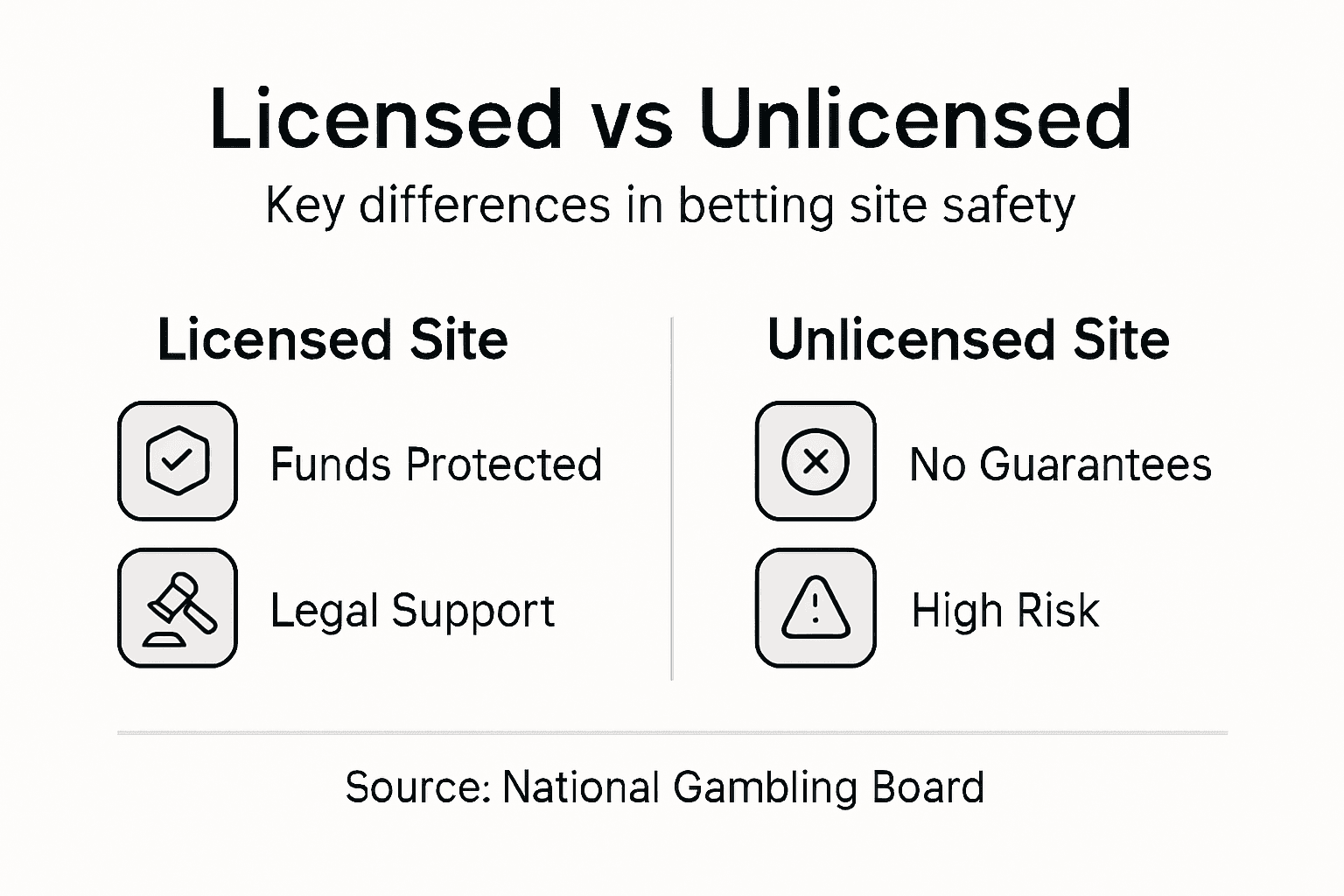
Consider the regulatory oversight gap. Licensed operators must obtain explicit approval from provincial authorities, prove financial stability, undergo background checks, and maintain detailed operational records. They face ongoing compliance monitoring through regular audits, inspections, and reporting requirements. Unlicensed operators skip all of this entirely. They don’t register with any authority, don’t undergo financial scrutiny, and don’t submit to inspections. When something goes wrong with a licensed operator, provincial regulators investigate complaints and can impose sanctions ranging from fines to license revocation. With unlicensed operators, there’s nobody investigating anything because they operate outside regulatory jurisdiction. This creates a stark contrast in accountability. A licensed operator might try to cheat you, but they face real consequences if caught. An unlicensed operator faces zero consequences, making cheating and fraud far more likely.
Here’s how the two compare across critical dimensions:
- Player Fund Protection: Licensed operators must maintain segregated player accounts backed by regulatory requirements. Unlicensed operators have no such obligation, and your funds sit in regular business accounts with zero protection.
- Dispute Resolution: Licensed sites must establish formal complaint procedures that escalate to provincial regulators if needed. Unlicensed operators ignore complaints entirely since they operate outside regulatory reach.
- Security Standards: Licensed operators must implement encryption, data protection measures, and security audits. Unlicensed sites typically use bare-minimum security or none at all.
- Responsible Gambling Tools: Licensed platforms must offer deposit limits, self-exclusion options, and problem gambling resources. Unlicensed operators ignore responsible gambling entirely.
- Transparency: Licensed sites publicly display license information, terms, odds, and financial data. Unlicensed operators hide their origins and make it difficult to contact them.
- Odds and Payout Verification: Licensed operators use certified random number generators and undergo regular testing. Unlicensed operators control odds however they choose with zero verification.
The cost difference between licensed and unlicensed operators often tempts bettors. Unlicensed sites might offer higher odds or larger welcome bonuses because they don’t spend money on compliance, security, or customer service. But this apparent savings comes at enormous hidden cost. Fund loss, identity theft, and unresolved disputes turn that cheap bonus into an expensive lesson. Licensed operators appear more expensive because they’re actually spending money on systems that protect you. When comparing operators, focus on licensing status before anything else. If a site can’t display a valid provincial license, walk away immediately regardless of how attractive their offers appear.
For easy reference, here are the core differences between licensed and unlicensed betting operators:
| Criteria | Licensed Operator | Unlicensed Operator |
|---|---|---|
| Regulatory Oversight | Provincial boards monitor | No official oversight |
| Player Protection | Segregated player accounts | Mixed with business funds |
| Data Security | Encryption, compliance | Weak or absent controls |
| Accountability | Regulator handles disputes | No dispute process |
This summary highlights the risk gap facing bettors who choose unlicensed sites.
Pro tip: Create a simple checklist before betting anywhere: verify license number with provincial regulator, confirm segregated player accounts are mentioned in terms, check for SSL encryption on the site, and confirm responsible gambling tools are available before you deposit a single rand.
Choose Safety First With Licensed Betting Sites in South Africa
Finding a trustworthy betting platform can feel overwhelming given the risks highlighted in this article. You want to avoid unlicensed operators who jeopardize your money and personal data while ensuring the site is fully compliant with South African provincial licensing. With so much at stake, it is essential to bet only on platforms that protect your funds through segregated accounts and offer responsible gambling tools that prioritize your wellbeing.

Discover your safest options today by exploring expert-reviewed and fully licensed sports betting platforms on Casinoboss.co.za. Our detailed guides and comparisons help you verify licensing, understand financial protections, and identify reputable sites. Take the next step to safeguard your betting experience with tips from our Blackjack Video Tips Archives – casinoboss and other strategy resources. Don’t gamble with your security. Start your journey now at Casinoboss.co.za and bet with confidence on sites that put your safety first.
Frequently Asked Questions
What defines a licensed betting site?
A licensed betting site operates under authorization from provincial authorities and complies with specific gambling laws. They must display their local licenses and adhere to standards that protect your funds and personal information.
Why is it important to use licensed betting sites?
Using licensed betting sites ensures that your funds are protected, you have a legal recourse in case of disputes, and you are provided with consumer protections such as responsible gambling measures.
What risks are associated with unlicensed betting sites?
Unlicensed betting sites pose significant risks, including the potential loss of funds with no legal recourse, lack of data security, and absence of responsible gambling tools. They operate without regulatory oversight, making them susceptible to fraudulent activities.
How can I verify if a betting site is licensed?
You can verify a betting site’s license by checking for their license number in the site’s footer or
Recommended

