


Online Gambling Trends 2026 – Impact on South Africans


Choosing where and how to bet online in South Africa has never been more complex or rewarding than it will be in 2026. With every click, tech-savvy players weigh new technologies, shifting legal requirements, and evolving definitions of what actually counts as gambling. Navigating these changes, from mobile-first platforms to responsible gaming protections and licensing checks, helps you outmanoeuvre scams and capitalise on the real opportunities. This guide breaks down the essential concepts that safeguard your wagers and sharpen your strategic edge.
Table of Contents
- Core Concepts Of Online Gambling In 2026
- Emerging Technologies Driving Gambling Innovation
- Regulatory Changes Shaping Safe Betting
- Popular Platforms, Games, And Payment Methods
- Risks, Responsible Gaming, And Costs In 2026
Key Takeaways
| Point | Details |
|---|---|
| Understanding Licensing | Always verify a platform’s provincial licence to ensure compliance with local regulations and protect your funds. |
| Emphasis on Responsible Gambling | Licensed platforms are required to implement responsible gambling tools to help manage betting behaviour and mitigate risks of addiction. |
| Technological Advancements | Emerging technologies like AI and blockchain enhance player safety, fairness, and transparency in online gambling environments. |
| Risk Awareness | Be mindful of the financial and psychological risks of online gambling; set strict budgets and utilise platform tools to maintain control over your gambling activities. |
Core concepts of online gambling in 2026
Online gambling in 2026 has evolved far beyond the simple casino rooms of the past. Understanding what actually qualifies as gambling, how it’s regulated, and what makes it different from other forms of entertainment is essential for any South African player making informed decisions about where to bet your money.
At its core, gambling involves wagering money on uncertain outcomes to win additional funds or goods. This definition covers everything from traditional casino tables to online slots, sports betting, fantasy betting, and lotteries. The National Treasury’s framework includes both physical and digital platforms, treating them equally under gambling law.
What makes 2026 different is the sheer variety of formats available:
- Casino games (blackjack, roulette, poker variants)
- Slot machines (both video and digital)
- Sports betting (traditional wagering on match outcomes)
- Fantasy betting (wagering on individual player performances)
- Lotteries and bingo (draw-based games)
Each category operates under specific licensing rules. South Africa’s regulatory environment divides authority between national and provincial bodies, meaning the legal status of different gambling products varies by province. What’s licensed in one province might not be in another—this matters when choosing where to play.
Understanding these distinctions protects you from blacklisted online casinos and unregulated platforms operating illegally in your province.
The distinction between recreational gambling and problem gambling behaviour has become increasingly important in 2026. Regulators now define a spectrum from casual play (occasional betting for entertainment) through to pathological gambling (compulsive wagering despite financial harm). South African authorities emphasise this because problem gambling creates measurable societal costs.
This matters to you because licensed platforms must implement responsible gambling tools. You’ll encounter deposit limits, self-exclusion options, and cooling-off periods as standard features—not optional extras.
Provincial licensing systems remain fragmented in 2026. The Western Cape, Gauteng, and KwaZulu-Natal each manage their own approved operators. Before depositing funds, confirm your chosen platform holds valid licensing from your provincial authority. Many fraudulent sites operate by ignoring these requirements entirely.
When evaluating a platform, check for these core elements:
- Valid provincial licence number (verifiable on regulator websites)
- Transparent terms addressing wagering requirements
- Clear privacy policies protecting your personal data
- SSL encryption on payment pages
- Regular third-party audits of game fairness
Scam prevention requires knowing that unlicensed operators cannot legally operate in South Africa. If a site claims to be South African but holds no verifiable licence, that’s your first warning sign of potential fraud.
Here is a quick comparison of licensed and unlicensed online gambling platforms in South Africa:
| Aspect | Licensed Platforms | Unlicensed Platforms |
|---|---|---|
| Regulatory Oversight | Provincial and national regulators | No valid oversight or accountability |
| Player Fund Protection | Segregated accounts, protected by regulation | Player funds at risk in business failures |
| Dispute Resolution | Formal mechanisms for complaint handling | No recourse for unresolved disputes |
| Responsible Gaming Tools | Mandatory deposit and loss controls, self-exclusion | Absent; addiction and overspending unmanaged |
| Game Fairness Verification | Regular third-party audits and published outcomes | No independent validation of game fairness |
Pro tip: Before creating an account, visit your provincial gambling authority’s official website and cross-reference any platform against their licensed operators list—this single step eliminates most blacklisted casinos and unregulated betting sites masquerading as legitimate options.
Emerging technologies driving gambling innovation
Technology in 2026 has fundamentally changed how South Africans gamble online. Mobile platforms, real-time betting interfaces, and advanced data analytics now define the user experience. These innovations go beyond flashy graphics—they directly impact your safety, fairness, and ability to make smarter betting decisions.
Mobile-first design dominates the landscape. Most players now access betting platforms exclusively through smartphones rather than computers. This shift means seamless, interactive gambling experiences optimised for touch replace clunky desktop interfaces. Operators invest heavily in responsive design because players expect instant access anywhere, anytime.
Real-time betting represents a significant change from traditional wagering. You no longer place a bet and wait for results hours later. Modern platforms update odds instantaneously as events unfold, allowing in-play adjustments and dynamic decision-making. This creates more engaging experiences but demands stronger self-control from players.
Artificial intelligence now plays a protective role behind the scenes:
- Risk detection systems identify unusual betting patterns suggesting problem gambling
- Fraud prevention tools flag suspicious transactions and account activity
- Personalised content delivery tailors game recommendations to your preferences
- Responsible gambling alerts notify you when spending approaches set limits
Blockchain technology addresses transparency concerns. Some platforms now use distributed ledgers to verify game fairness publicly. Rather than trusting operators’ claims about random number generation, blockchain creates permanent, verifiable records of each game outcome. This protects you from rigged games and blacklisted operators using unfair algorithms.
Enhanced cybersecurity protocols and encryption standards now protect your personal data and banking information from fraud, representing genuine technological advancement in player protection.
Payment systems have revolutionised. Beyond credit cards, platforms now accept digital wallets, cryptocurrency payments, and localised methods. This flexibility matters because it reduces your exposure to payment fraud and provides alternative options if traditional banking fails.

Data analytics capabilities have expanded dramatically. Operators collect information about your betting behaviour—not to exploit you, but increasingly to identify at-risk players requiring intervention. Licensed platforms use this data to trigger responsible gambling tools automatically.
This table highlights how emerging technologies shape the player experience in 2026:
| Technology | Key Benefit | Impact on Players |
|---|---|---|
| Mobile Platforms | Instant access via smartphones | Play anywhere, anytime |
| Real-Time Betting | Live odds and in-play adjustments | Greater engagement, faster bets |
| AI Systems | Risk and fraud pattern detection | Increased safety and custom alerts |
| Blockchain | Transparent, public game records | Verifiable fairness in outcomes |
| Digital Payments | Wider, faster payment options | Speedier deposits and withdrawals |
These technologies create several practical benefits:
- Faster payment processing (deposits and withdrawals clear within hours)
- Improved game variety through advanced streaming technology
- Better fraud detection protecting your account
- Customised notifications aligned with your preferences
- Stronger encryption keeping sensitive data secure
Pro tip: Prioritise platforms using SSL encryption (look for the padlock icon in your browser’s address bar) and verify they mention AI fraud detection in their security policies—these technological standards genuinely separate legitimate operators from potential scams.
Regulatory changes shaping safe betting
South Africa’s regulatory environment for online gambling is evolving rapidly in 2026. These changes directly affect where you can gamble safely, what protections apply to your account, and how operators must treat your money. Understanding these shifts helps you identify legitimate platforms from fraudulent ones.
National taxation frameworks and enhanced consumer protections now standardise how operators conduct business across South Africa. The National Treasury’s proposed 20% tax on gross gambling revenue creates a single national standard replacing fragmented provincial rules. This matters because it forces unlicensed operators out of business—they cannot afford to pay this tax and remain competitive.
Regulatory bodies have strengthened enforcement powers significantly. Provincial authorities now actively investigate unlicensed operators and shut down blacklisted sites targeting South African players. This crackdown protects you from scams because fraudsters have fewer safe places to hide their operations.
Key regulatory changes affecting your experience include:
- Tighter licensing requirements preventing operators from cutting corners on security
- Enhanced consumer protection rules mandating segregated player funds
- Problem gambling identification systems triggering automatic intervention
- Regular third-party audits verifying game fairness and payment integrity
- Stricter data privacy standards protecting your personal information
The shift towards a unified national framework reduces confusion. Previously, platforms could exploit gaps between provincial regulations. Now, operators must meet consistent minimum standards regardless of province. Licensed platforms display their regulatory credentials clearly—if you cannot find licensing information, assume the site operates illegally.
Regulatory convergence at national and provincial levels means legitimate operators invest heavily in compliance, whilst unlicensed gambling sites lack these protections entirely.
Consumer protection has become a regulatory priority. Licensed platforms must now prove they hold player funds separately from operational accounts. If an operator faces financial difficulties, your deposits remain protected—they cannot be seized to cover business debts. Unlicensed operators offer no such guarantee.
Problem gambling intervention has advanced. Operators must now implement automated risk detection systems monitoring your betting patterns. When spending reaches concerning levels, platforms trigger warnings and cooling-off periods. This regulatory requirement separates responsible operators from those ignoring player welfare.
Licensing enforcement against unregulated sites continues intensifying. Authorities now actively block access to blacklisted platforms and pursue operators advertising illegally. The clearer regulatory environment makes it easier to verify whether a site actually holds valid licensing.
These regulatory improvements create practical safeguards:
- Your deposits receive legal protection unavailable at unlicensed sites
- Independent auditors verify games operate fairly
- Dispute resolution mechanisms exist if problems arise
- Data encryption becomes mandatory, not optional
- Responsible gambling tools function as regulatory requirements
Pro tip: Before depositing, verify any platform’s licensing status directly on your provincial gambling regulator’s official website—this single step confirms whether protection laws apply to your account or whether you’re gambling on an illegal, unregulated site.
Popular platforms, games, and payment methods
Choosing where to gamble in 2026 involves understanding which platforms operate legally, what games they offer, and how to deposit and withdraw safely. South Africa’s licensed operators have consolidated around proven platforms, each with distinct advantages depending on your betting style.
Licensed platforms operating under provincial authority include those offering casino games, sports betting, poker, and lotteries. These operators comply with South African financial regulations, meaning your transactions receive proper oversight. Unlicensed alternatives might offer enticing bonuses, but they provide zero financial protection if something goes wrong.
Game variety matters when selecting a platform. Most licensed operators now offer overlapping game types, but their execution differs significantly. Some platforms excel at sports betting, others at table games, and others at live dealer experiences. Your choice depends on where you find the best odds, lowest house edge, and most responsive customer service.
Popular game categories across South African platforms include:
- Live dealer games (blackjack, roulette, baccarat with real dealers)
- Sports betting (football, rugby, horse racing with live odds)
- Slot machines (video slots with varying volatility and themes)
- Table games (poker, craps, Texas Hold’em variants)
- Lotteries and bingo (draw-based games with fixed schedules)
Payment methods have expanded significantly to suit different preferences. Credit and debit cards remain popular, but Electronic Funds Transfer (EFT), digital wallets, and mobile payment systems now dominate. This diversification matters because it reduces dependency on single payment channels and provides backup options.
Licensed platforms must comply with South African financial regulations, meaning your deposits and withdrawals undergo proper scrutiny—unlicensed sites skip these protections entirely.
Deposit methods currently available on legitimate platforms include:
- Credit/debit cards (Visa, Mastercard)
- EFT transfers (direct bank-to-platform payments)
- Digital wallets (PayPal, Skrill, Neteller)
- Mobile money (airtime-based payments)
- Cryptocurrency (increasingly accepted by regulated operators)
Withdrawal speeds vary between platforms and payment methods. Card withdrawals typically take 3-5 business days, while EFT transfers clear within 24 hours. Digital wallet withdrawals process almost instantly. Unlicensed platforms often delay or refuse withdrawals entirely—this red flag alone should eliminate them from consideration.
Security during payment processing separates legitimate platforms from scams. Licensed operators use SSL encryption (that padlock icon in your browser) protecting financial details. They also segregate player funds from operational accounts, meaning your money stays yours even if the platform faces financial trouble.
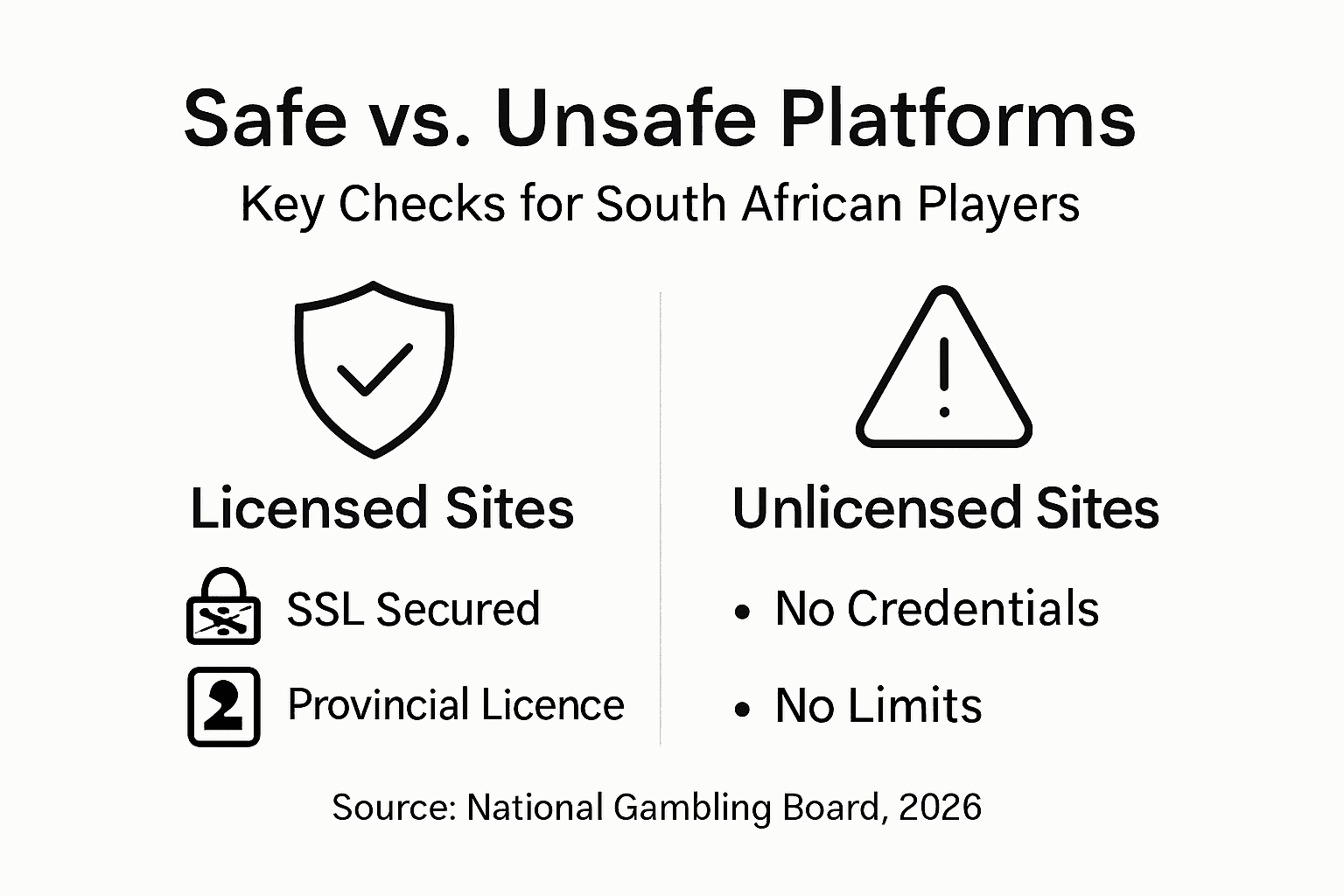
Platform selection requires verification of licensing credentials. Each legitimate operator displays their provincial licence number prominently. You should be able to cross-reference this number on your provincial gambling regulator’s website. If a platform claims to operate legally but you cannot verify its licence, assume it’s fraudulent.
Many fraudulent sites copy legitimate platforms’ designs and payment systems while operating without proper licensing. These blacklisted casinos disappear with player funds after running for months. Verification takes two minutes and eliminates this risk entirely.
Bonus offers vary dramatically between platforms. Legitimate operators offer transparent wagering requirements clearly stated before claiming bonuses. Unregulated sites use bonus traps—impossible wagering requirements designed to prevent withdrawals. This distinction separates honest operators from scammers.
Pro tip: Always deposit using EFT transfers rather than cards when possible—this creates a direct paper trail from your bank to the platform, providing evidence if disputes arise, and makes it easier to demonstrate unauthorized transactions if fraud occurs.
Risks, responsible gaming, and costs in 2026
Online gambling in 2026 carries real financial and psychological risks that extend beyond losing money on bets. Understanding these dangers helps you make informed decisions and recognise warning signs before gambling causes serious harm to your finances, relationships, or wellbeing.
Financial risk remains the most obvious concern. Players can lose substantial sums in minutes, particularly on high-volatility slots or live betting. Unlike physical casinos where you see your money disappearing, online platforms make spending feel abstract—numbers on a screen rather than notes leaving your wallet. This psychological distance encourages larger bets and longer sessions.
Problem gambling affects individuals across all income levels and age groups, from university students misusing allowances to professionals betting away retirement savings. The National Gambling Board has documented increasing harm among young adults, particularly those gambling on illegal platforms offering no responsible gaming protections.
Risks specific to online gambling include:
- Accessibility (24/7 availability from your phone)
- Speed (rapid bet placement without cooling-off periods)
- Disguised losses (abstract money representation)
- Isolation (gambling alone rather than in social settings)
- Aggressive marketing (bonus offers and notifications)
Problem gambling develops gradually. Early warning signs include betting with money intended for bills, hiding gambling losses from family, or feeling anxious when unable to gamble. Many players don’t recognise they’ve crossed from recreation into addiction until significant financial damage occurs.
Youth face particular vulnerability. South Africa continues investing in problem gambling support programs, targeting students whose limited income makes even modest losses proportionally devastating. Student allowances diverted to gambling reduce funds for food, accommodation, and education.
Gambling on illegal platforms amplifies risks because they lack responsible gaming tools, operate without oversight, and disappear when problems arise—leaving players with no recourse.
Responsible gaming tools available on licensed platforms include:
- Deposit limits (restrict how much you can wager daily or weekly)
- Loss limits (automatic account closure after reaching loss thresholds)
- Time limits (forced breaks after extended sessions)
- Self-exclusion (block your account for 6-12 months)
- Reality checks (pop-up reminders about time spent and money wagered)
Unlicensed platforms offer none of these protections. They actively exploit addiction by removing spending limits, sending notification spam encouraging larger bets, and making withdrawals difficult to encourage reinvestment of winnings.
Costs of problem gambling extend beyond individual players. Relationships suffer when partners discover hidden gambling debts. Employers notice productivity declines as addiction escalates. Healthcare systems bear costs treating depression and anxiety linked to gambling losses. South Africa’s National Gambling Board estimates societal costs at millions annually.
Free support exists. The National Gambling Board provides confidential counselling, treatment programmes, and support groups. National Responsible Gambling Month campaigns educate communities about warning signs and available help.
Pro tip: Set a strict monthly gambling budget before playing—treat it like money spent on entertainment that you cannot recover—and use your platform’s deposit limit feature to enforce this boundary automatically, preventing impulsive spending during losing streaks.
Stay Ahead in South Africa’s Online Gambling Landscape with Expert Guidance
Navigating the evolving world of online gambling in 2026 can be challenging, especially with varied provincial licensing and emerging technologies shaping your experience. If you want to protect your funds, play on licensed platforms, and make smarter bets while embracing responsible gambling tools, expert advice is key. Discover how to separate trustworthy sites from blacklisted operators and benefit from advanced insights into popular games such as blackjack and sports betting.
Unlock your winning potential today by exploring comprehensive reviews and strategy tips at Casinoboss.co.za. Whether you want to master table games or refine your betting strategy, start with our Blackjack Video Tips Archives – casinoboss for expert knowledge. Confirm licensing, assess safety features, and find your ideal platform now to experience seamless, secure, and rewarding gambling in South Africa.
Frequently Asked Questions
What are the main types of online gambling available in 2026?
The main types of online gambling in 2026 include casino games (like blackjack and roulette), slot machines, sports betting, fantasy betting, lotteries, and bingo. Each category offers unique experiences and operates under specific licensing rules.
How do I identify a licensed online gambling platform?
To identify a licensed online gambling platform, check for a valid provincial licence number on the platform’s site, which can be verified on the regulator’s website. Ensure there are transparent terms, privacy policies, and SSL encryption on payment pages.
What responsible gambling tools are offered by licensed platforms in 2026?
Licensed platforms in 2026 must implement responsible gambling tools such as deposit limits, loss limits, time limits, self-exclusion options, and reality checks. These features help players maintain control over their gambling behaviour.
What are the risks associated with online gambling in 2026?
The risks associated with online gambling in 2026 include financial losses, addiction, and mental health issues. Factors like 24/7 accessibility, rapid bet placement, and aggressive marketing can exacerbate these risks, particularly when gambling on unlicensed platforms.
Recommended

