


Data Security in Betting – Safeguarding South African Players


Every South African sports bettor knows the uneasy feeling that comes with entering personal and financial details online. With betting platforms collecting complex player data and persistent cyber threats, protecting your privacy has never been more urgent. This article brings clarity to the core principles of data security in online betting and offers practical insights to help you choose safer platforms and manage your information responsibly.
Table of Contents
- Defining Data Security in Online Betting
- Types of Data at Risk on Betting Sites
- Essential Data Security Technologies and Practices
- Regulatory Requirements and South African Laws
- Risks of Data Breaches and User Responsibilities
Key Takeaways
| Point | Details |
|---|---|
| Data Security Principles | Online betting platforms must prioritise confidentiality, integrity, and availability to protect player information effectively. |
| Technological Implementations | Utilising advanced encryption, multi-factor authentication, and regular security audits are vital for safeguarding data. |
| Regulatory Compliance | Adhering to South African data protection laws, particularly the POPIA, enhances user trust and ensures responsible gambling practices. |
| User Responsibilities | Players should employ strong passwords, enable two-factor authentication, and monitor their accounts to mitigate data breach risks. |
Defining Data Security in Online Betting
Data security in online betting represents a sophisticated digital protection strategy designed to safeguard sensitive player information within the South African gambling ecosystem. This comprehensive approach involves multiple technological and procedural mechanisms aimed at preventing unauthorized access, data breaches, and potential cyber threats.
The core principles of data security in online betting revolve around three fundamental elements:
- Confidentiality: Ensuring player personal and financial details remain private
- Integrity: Preventing unauthorized modifications to stored data
- Availability: Maintaining secure and consistent access to user information
Understanding these principles becomes crucial, especially considering the digital innovation challenges in South African digital environments. Online betting platforms must implement robust security frameworks that protect user data from potential vulnerabilities.
Specifically for South African online gambling, data security involves comprehensive strategies such as:
- Implementing advanced encryption technologies
- Utilising multi-factor authentication protocols
- Regular security audits and vulnerability assessments
- Compliance with national data protection regulations
Cybersecurity experts recognise that information security management in sports betting requires a proactive and dynamic approach. This means continuously adapting security protocols to address emerging digital threats and technological advancements.
Pro tip: Always verify a betting platform’s security certifications and data protection policies before registering your personal information.
Types of Data at Risk on Betting Sites
Online betting platforms collect a wide range of sensitive data that can potentially expose South African players to significant privacy and security risks. Personal identifiable information in digital betting environments represents a critical area of vulnerability that requires comprehensive protection strategies.
The primary types of data at risk on betting sites include:
- Personal Identification Data: Full names, addresses, contact details
- Financial Information: Bank account numbers, credit card details
- Authentication Credentials: Login usernames and passwords
- Transactional History: Betting patterns, win/loss records
- Device and Location Data: IP addresses, geolocation information
Beyond basic personal details, betting platforms collect complex user behaviour data that can reveal intricate patterns about individual gambling habits. This sophisticated data collection enables platforms to build comprehensive user profiles, which simultaneously increases both platform intelligence and potential security risks.

Cybercriminals target these data repositories because they represent valuable assets. Financial information can be sold on dark web marketplaces, while personal details might be used for identity theft or sophisticated phishing schemes. South African online betting platforms must therefore implement robust, multi-layered security protocols to protect these sensitive digital assets.
Specifically, the most vulnerable data categories include:
- Complete financial transaction records
- Personal identification documentation
- Email and communication logs
- Detailed betting history and preferences
Pro tip: Regularly monitor your online betting account statements and immediately report any suspicious activities to prevent potential data misuse.
Essential Data Security Technologies and Practices
Information security management frameworks represent the cornerstone of robust digital protection for online betting platforms in South Africa. These comprehensive strategies combine advanced technological solutions with strategic procedural protocols to defend against increasingly sophisticated cyber threats.
Key data security technologies crucial for betting sites include:
- Advanced Encryption: Protecting data transmission and storage
- Multi-Factor Authentication: Preventing unauthorised account access
- Secure Socket Layer (SSL) Protocols: Establishing encrypted communication channels
- Intrusion Detection Systems: Monitoring and blocking potential security breaches
- Regular Security Audits: Identifying and addressing potential vulnerabilities
Cybersecurity measures for sports betting platforms extend beyond technological implementations. They require a holistic approach that integrates technical safeguards with comprehensive risk management strategies, ensuring continuous protection of sensitive user information.
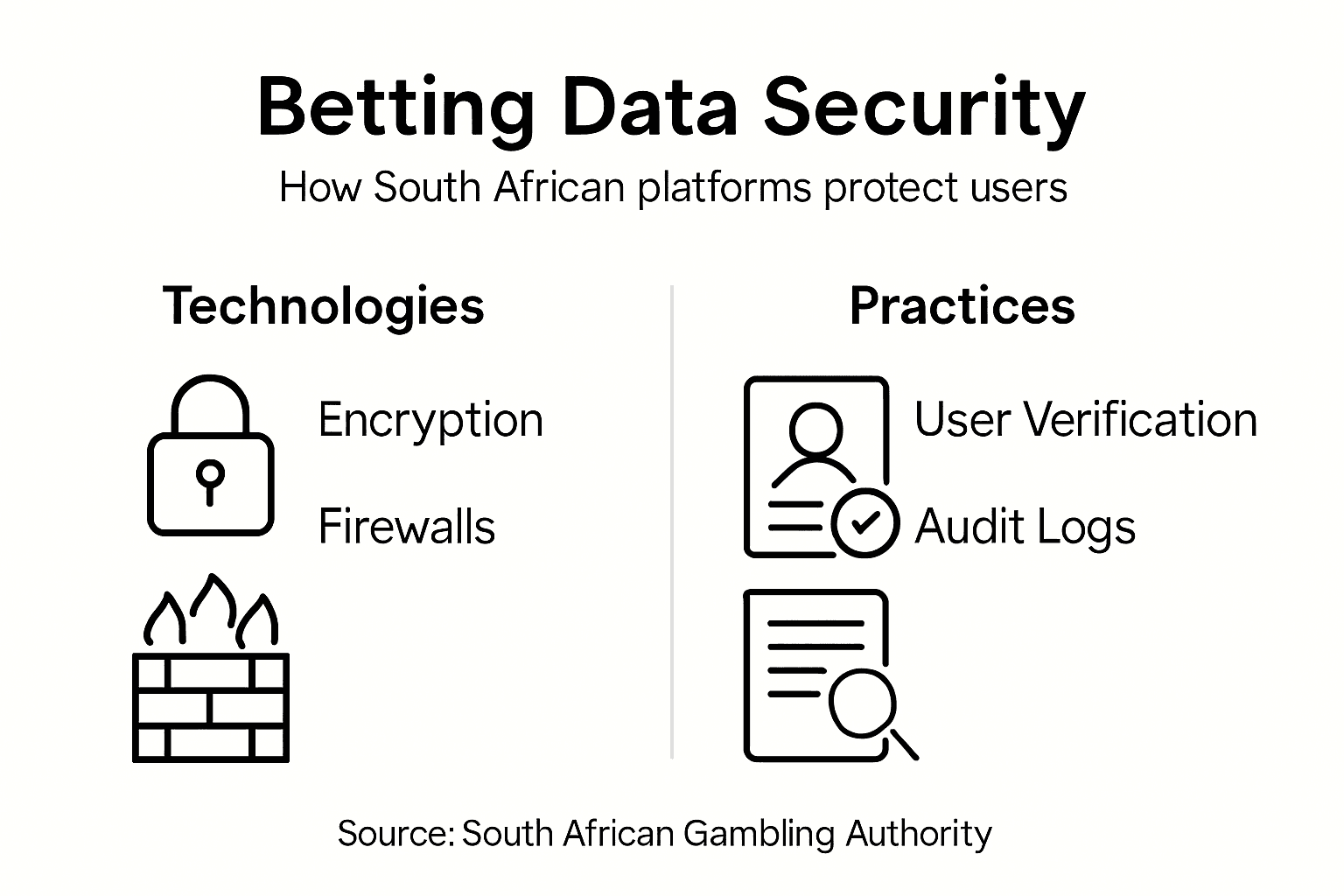
To compare the effectiveness of key data security technologies in online betting, see the table below:
| Technology | Main Function | Impact on Player Security |
|---|---|---|
| Advanced Encryption | Scrambles data for safe transmission | Prevents data theft during transfer |
| Multi-Factor Authentication | Requires extra verification steps | Blocks unauthorised account access |
| SSL Protocols | Secures website connections | Prevents eavesdropping online |
| Intrusion Detection | Monitors for suspicious activity | Detects and stops cyber attacks |
| Security Audits | Reviews and tests defences | Finds weaknesses before hackers do |
The most critical practices for maintaining data security involve:
- Implementing end-to-end encryption
- Conducting regular penetration testing
- Maintaining strict access control protocols
- Developing rapid incident response mechanisms
- Ensuring continuous staff cybersecurity training
Pro tip: Enable two-factor authentication and use unique, complex passwords for your online betting accounts to significantly reduce the risk of unauthorised access.
Regulatory Requirements and South African Laws
Data protection frameworks in South Africa represent a comprehensive legal ecosystem designed to safeguard personal information across digital platforms, including online betting environments. The Protection of Personal Information Act (POPIA) establishes rigorous standards for data handling and privacy protection.
Key regulatory requirements for online betting platforms include:
- Lawful Data Processing: Obtaining explicit user consent
- Data Minimisation: Collecting only necessary personal information
- Purpose Limitation: Using data solely for specified betting purposes
- Security Safeguards: Implementing robust protection mechanisms
- User Rights: Providing transparency and access to personal data
Online gambling legislation in South Africa demonstrates a complex regulatory landscape that intersects digital privacy, gambling regulations, and consumer protection. The National Gambling Act provides a foundational framework for monitoring and controlling online betting activities.
The table below summarises South African data protection laws most relevant to online betting platforms:
| Regulation | Key Requirement | Significance for Betting Sites |
|---|---|---|
| POPIA | Lawful personal data processing | Ensures user consent and fairness |
| National Gambling Act | Regulates gambling operations | Enforces responsible operator conduct |
| Data Minimisation | Limits unnecessary data collection | Reduces risk of information misuse |
| User Rights | Grants data access and erasure | Improves user trust and transparency |
The most critical legal compliance areas for betting operators involve:
- Adhering to POPIA data protection principles
- Maintaining transparent user consent processes
- Implementing secure data storage protocols
- Enabling user data access and deletion requests
- Conducting regular compliance audits
Pro tip: Always review a betting platform’s privacy policy and data handling practices to understand how your personal information will be managed and protected.
Risks of Data Breaches and User Responsibilities
Data breach risks in South African digital environments represent a significant threat to personal and financial security for online betting participants. These breaches can lead to devastating consequences, including financial fraud, identity theft, and long-term personal reputation damage.
The primary risks associated with data breaches in online betting platforms include:
- Financial Exploitation: Unauthorized transactions and account hijacking
- Identity Theft: Misuse of personal identification information
- Reputation Damage: Potential public exposure of personal gambling history
- Psychological Impact: Stress and anxiety from potential data compromise
- Long-term Financial Consequences: Potential credit score implications
Best practices for securing personal digital information emphasise the critical role of individual user responsibilities in preventing data vulnerabilities. Users must actively participate in protecting their personal information through proactive security measures.
Key user responsibilities for minimising data breach risks involve:
- Using strong, unique passwords for betting accounts
- Enabling two-factor authentication
- Avoiding public Wi-Fi networks for betting transactions
- Regularly monitoring account activity
- Being cautious of phishing attempts and suspicious communications
Pro tip: Treat your online betting account credentials with the same level of security you would use for your bank account, and never share login information with anyone.
Protect Your Betting Experience with Trusted Platforms
Data security remains a top concern for South African players navigating the online betting world. This article highlights the risks of data breaches and the importance of encryption, multi-factor authentication and regulatory compliance. At Casinoboss.co.za, we understand these challenges and focus on guiding you to safe and licensed online casinos and sports betting sites where your personal and financial information is protected with top-tier security.

Explore expert reviews and detailed comparisons on platforms that prioritise confidentiality, integrity and availability of your data. Whether you want tips on secure betting strategies or you are looking for trusted recommendations, our site offers everything you need to bet responsibly and confidently. Start your secure online gambling journey today by visiting Casinoboss.co.za and enhance your experience with insights from our Blackjack Video Tips Archives – casinoboss. Don’t wait to protect your data and enjoy betting with peace of mind.
Frequently Asked Questions
What is data security in online betting?
Data security in online betting refers to the strategies and technologies implemented to protect sensitive player information, preventing unauthorized access and potential cyber threats.
What types of data are at risk on betting sites?
Betting sites typically handle personal identification data, financial information, authentication credentials, transactional history, and device and location data, all of which require robust security measures to protect.
How can players protect their data when betting online?
Players can enhance their data security by using strong, unique passwords, enabling two-factor authentication, avoiding public Wi-Fi for transactions, monitoring their account activity regularly, and being vigilant against phishing attempts.
What regulatory requirements govern online betting data security?
Regulatory requirements include lawful data processing, data minimisation, purpose limitation, security safeguards, and user rights, ensuring that online betting platforms handle personal data responsibly and transparently.
Recommended

