


What Is Online Casino – Essential Facts for South Africans


Walking into the world of online casinos as a South African player can feel confusing, especially with myths about safety, legality, and game fairness clouding your choices. Trust matters, and local players know that picking a platform with legitimate licensing and strict player protections is key for peace of mind. This guide clears up common misconceptions, equips you to spot secure operators, and reveals smart strategies to boost your gaming experience while keeping your bonuses genuine.
Table of Contents
- Defining Online Casino and Common Myths
- Types of Online Casino Games Available
- How Online Casino Platforms Operate
- Legal Status and Licensing in South Africa
- Safety, Security, and Player Protections
- Risks, Costs, and Mistakes to Avoid
Key Takeaways
| Point | Details |
|---|---|
| Understanding Licensing | Always verify an online casino’s license through official regulatory bodies & avoid fraudulent sites. |
| Responsible Gambling Tools | Utilize deposit limits, loss limits, & self-exclusion features to help manage gambling habits effectively. |
| Recognizing House Edge | Be aware of the house edge in games, as it ensures casinos statistically retain more money than they pay out. |
| Avoid Chasing Losses | Do not increase bet sizes to recover losses; recognize when to take a break and stick to your budget. |
Defining Online Casino and Common Myths
An online casino is a digital platform that allows you to play gambling games over the internet from anywhere with a connection. Unlike physical casinos where you visit a building, online casinos bring the experience directly to your computer or mobile device. These platforms offer the same core games you’d find in traditional venues: slot machines, table games like blackjack and roulette, poker, baccarat, and live dealer games where real croupiers operate from studios. The key difference is convenience. You can play at 2 AM in your Johannesburg apartment or during your lunch break in Cape Town without traveling anywhere.
South African online casinos operate under licensing frameworks, primarily from regulatory authorities like the Western Cape Gambling and Racing Board or the National Gambling Board. Licensed operators must comply with strict regulations covering player protection, responsible gambling measures, and fair gaming standards. When you deposit money at a licensed online casino, that platform holds your funds in segregated accounts, separate from their operating capital. This separation protects your balance if the casino faces financial difficulties. The best platforms also use encryption technology to secure your personal and financial information, similar to what your bank uses.
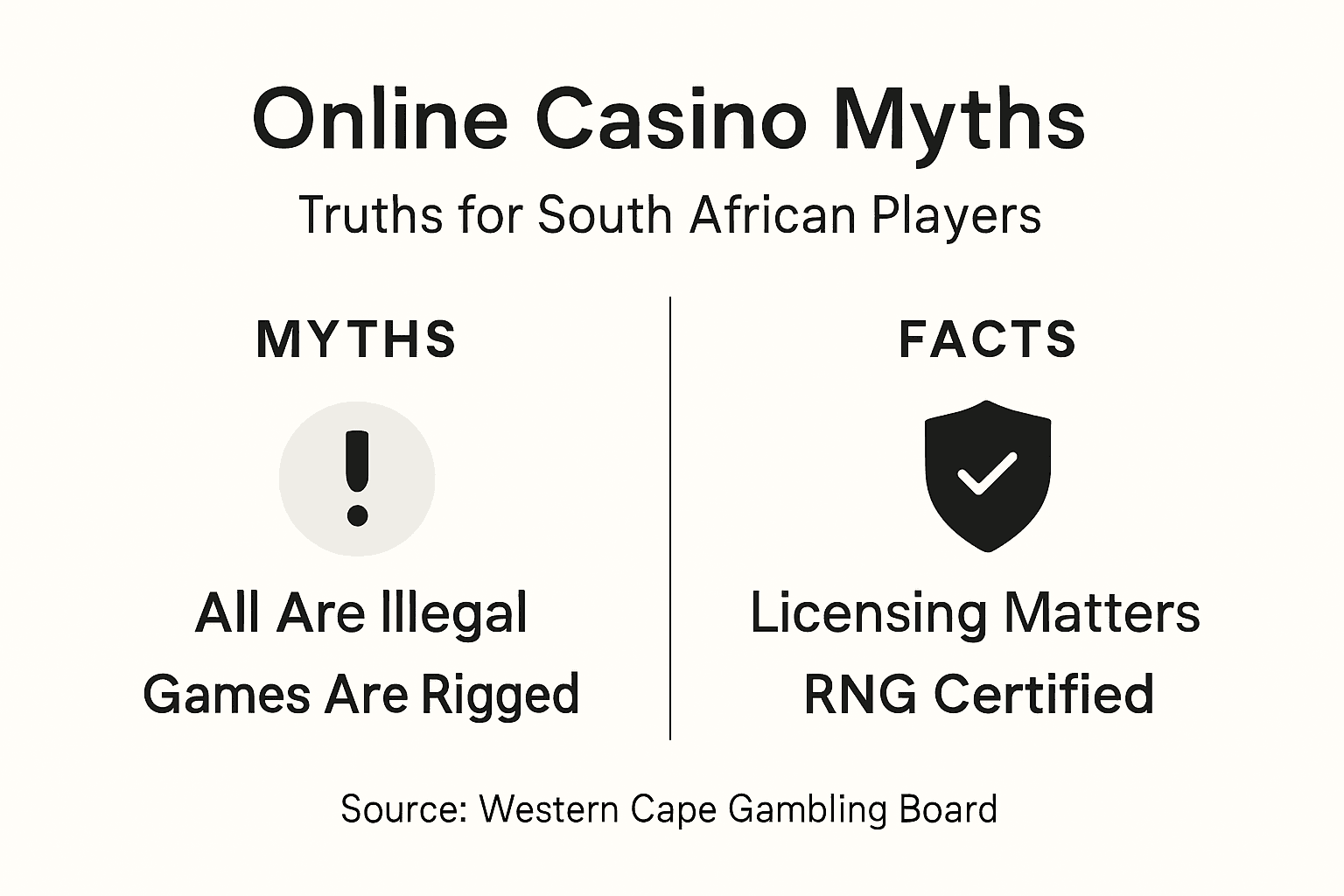
Now, let’s address the myths that often mislead South African players. The first major myth is that online casinos are inherently unsafe or scams. This conflates legitimate, licensed operators with fraudulent sites. Yes, fraudulent gambling operations exist, but preventing gambling scams requires knowing the difference between licensed and unlicensed platforms. Licensed casinos undergo regular audits, maintain transparent payout records, and face serious financial penalties for violations. An unlicensed operation has no such accountability, which is where the real danger lies.
Another common myth is that online casinos rig games against players. Licensed casinos use certified random number generators (RNG) tested by independent auditors. These algorithms produce unpredictable outcomes that meet international standards. If a casino rigged games, it would lose its license immediately upon detection. Regulatory bodies conduct regular audits of gaming software. The house edge exists in every casino game by design, which is how casinos profit, but this isn’t rigging—it’s mathematics. A properly designed slot with a 96 percent return to player rate means over time, players collectively get back 96 cents for every rand wagered, which operators publicly disclose.
Many players also believe that playing at online casinos is illegal in South Africa. The reality is more nuanced. South African law permits individuals to gamble at licensed online casinos operating under valid regulatory authority. What’s illegal is operating an unlicensed casino or promoting unlicensed gambling platforms within South Africa. As a player, using a licensed platform is completely legal. The National Gambling Board’s website lists approved operators, giving you a clear reference.
One final myth worth addressing is that you need huge bankrolls to play online casinos. This simply isn’t true. Licensed platforms accept deposits as small as R50 or R100. You can play responsibly at any stake level. Beginners often start small, learn game mechanics, and gradually increase stakes as they become comfortable. Progressive betting strategies exist, but your starting capital doesn’t determine your success—discipline and understanding game odds do.
Pro tip: Before depositing at any online casino, verify its license directly on the Western Cape Gambling and Racing Board or National Gambling Board website, never just trusting the casino’s claim, as this single step eliminates the vast majority of potential scam sites targeting South African players.
Types of Online Casino Games Available
Online casinos offer a staggering variety of games, far more than most physical casinos can fit on their floors. The selection ranges from simple games you can play in minutes to complex strategy games requiring skill and experience. Understanding what each category offers helps you choose games that match your playing style, bankroll, and risk tolerance. South African players have access to thousands of titles across dozens of providers, each with different themes, payout rates, and gameplay mechanics.
Slot Machines and Variations
Slots dominate online casino game libraries because they’re accessible and require no strategy or prior knowledge. You simply spin the reels and hope for matching symbols. Classic slots mimic traditional three reel machines found in physical casinos, while video slots feature five or more reels with advanced graphics and bonus features. Online slots tips can significantly improve your approach to these games. Progressive slots are particularly popular among South African players because they offer enormous jackpots that grow with every bet across linked casinos. A single spin could change your life. Return to player (RTP) rates for slots typically range from 92 to 98 percent, meaning you get back that percentage of wagered money over time. Volatility also matters: high volatility slots pay less frequently but offer bigger wins, while low volatility slots reward consistent smaller wins.
Table Games and Card Games
Blackjack remains one of the most popular table games online because it offers favorable odds when you play with proper strategy. The dealer plays according to fixed rules, and you make decisions that directly affect the outcome. Roulette works differently: you predict where a ball will land on a spinning wheel. American roulette has 38 pockets (including double zero), while European roulette has 37 pockets. This single difference changes the house edge from 5.26 percent to 2.70 percent, making European roulette better for players.
Baccarat is a card game where you bet on whether the player or banker wins, or if they tie. It requires minimal decisions and moves quickly. Craps involves rolling dice and betting on outcomes. Poker is fundamentally different because you compete against other players, not the house. Understanding how to play online poker helps you develop winning strategies. Poker has many variants: Texas Hold’em dominates, but you’ll also find Omaha, Seven Card Stud, and Five Card Draw.
Live Dealer Games
Live dealer games bridge the gap between online and physical casinos. A real dealer operates from a studio while you play from home, watching on video stream in real time. You make decisions using your computer or phone interface while the dealer executes your actions. Games include live blackjack, live roulette, live baccarat, and live poker. The experience feels incredibly authentic. These games have higher minimum bets than regular online games because casinos employ actual dealers and maintain studios, but the trade off is genuine human interaction and transparency.
Specialty Games
Beyond standard casino games, platforms offer specialty games like keno, bingo, scratch cards, and virtual sports betting. These games typically have simple rules and quick outcomes. Keno works like lottery numbers, bingo requires marking matching numbers, and scratch cards give instant results. Virtual sports betting lets you wager on computer generated football matches, horse races, or other competitions.
Understanding Game Selection Strategy
Choosing which games to play depends on your goals. If you want the best odds mathematically, blackjack and video poker offer the lowest house edge. If you seek large potential winnings, progressive slots or poker tournaments attract you. If you value entertainment without worrying about strategy, slots and roulette provide that simplicity. Many successful South African players split their time across multiple game types rather than specializing in one. This approach keeps the experience fresh and prevents fatigue from repetitive gameplay. Pay attention to RTP rates listed for each game. Higher RTP games return more money to players over time, though results vary significantly in the short term.
Here’s a comparison of popular online casino game types and their typical player considerations:
| Game Type | Skill Required | House Edge Range | Best For |
|---|---|---|---|
| Slot Machines | None | 2%-8% | Simplicity, entertainment |
| Blackjack | Moderate | 0.5%-2% | Strategy, low house edge |
| Roulette | Low | 2.7%-5.26% | Variety, mid-risk |
| Baccarat | None | 1%-1.5% | Fast-paced play |
| Poker | High | Variable | Skill-based competition |
| Bingo/Keno | None | 20%-30% | Quick outcomes |
| Live Dealer | Low | Varies by game | Real-time interaction |
Pro tip: Start by playing games in free demo mode before risking real money, which lets you understand game mechanics, bonus triggers, and volatility without any financial pressure.
How Online Casino Platforms Operate
Online casino platforms operate through a combination of software, payment systems, regulatory oversight, and customer service infrastructure that all work together behind the scenes. When you log into your account and place a bet, dozens of systems execute simultaneously to process your action, protect your money, and ensure fairness. Understanding how these platforms function helps you appreciate the complexity involved and recognize why licensed operators invest heavily in compliance and security. The mechanics differ significantly from physical casinos, but the core objective remains identical: deliver entertainment while maintaining strict fairness standards.

The Technical Infrastructure
Every online casino runs on specialized software licensed from gaming providers like Microgaming, NetEnt, or Playtech. These companies develop the actual games you play. The casino operator purchases licensing rights to use this software on their platform. When you spin a slot machine or place a blackjack bet, the gaming software processes your action instantly. Behind the scenes, random number generators (RNG) produce unpredictable outcomes that determine game results. These RNGs undergo independent certification from organizations like eCOGRA or GLI to verify they produce truly random results meeting international standards. The software also communicates with the casino’s backend systems, updating your balance, recording your wagers, and logging all activity for regulatory audit purposes.
Payment processing represents another critical layer. When you deposit funds, your money doesn’t go directly into a casino account. Licensed operators maintain segregated accounts held in trust, separate from operating funds. If a casino goes bankrupt, your balance remains protected because it’s held independently. This separation is a legal requirement in most jurisdictions. Payments flow through payment processors like Visa, Mastercard, or specialized gambling payment networks that facilitate transactions between players and casinos while managing fraud detection and currency conversion for international operations.
Regulatory Oversight and Compliance
Licensed online casinos operate under regulatory authority, which in South Africa typically means the Western Cape Gambling and Racing Board or the National Gambling Board. These bodies conduct regular audits to verify that casinos comply with regulations covering player protections, responsible gambling measures, and fair gaming standards. How casinos are rated depends heavily on these regulatory compliance factors. Operators must submit detailed financial records, game audit reports, and compliance documentation regularly. Regulatory bodies test gaming software independently to confirm RNG legitimacy and verify payout percentages match advertised rates.
Many platforms operate offshore but serve South African players by complying with international regulations and accepting South African payments. These operators recognize that building trust with South African customers requires transparency, licensing verification, and responsive customer service. The platform publishes its licensing information prominently, provides contact details for regulatory bodies, and maintains clear terms of service explaining your rights and responsibilities.
Player Account Management and Data Security
Your personal account contains sensitive information: identification documents, banking details, transaction history, and gaming records. Platforms protect this information using encryption technology similar to what your bank employs. Data travels in encrypted form between your device and casino servers, making it unreadable to anyone intercepting the connection. Casinos also implement firewalls, intrusion detection systems, and regular security audits to prevent unauthorized access. Multi factor authentication adds an extra protection layer by requiring a verification code in addition to your password when logging in from new devices.
Casino operators also implement responsible gambling tools built into their platforms. You can set deposit limits restricting how much you spend weekly or monthly. You can set loss limits to pause your account if losses exceed a certain amount. You can self exclude temporarily or permanently, which adds your account to a casino’s excluded players list, preventing access. These tools operate at the platform level, automatically enforcing restrictions without relying on player willpower alone. Legitimate operators display these tools prominently rather than hiding them, recognizing that responsible gambling builds long term trust and prevents harmful behaviors.
Payment Processing and Withdrawal Procedures
When you request a withdrawal, casinos verify your account hasn’t violated terms of service, then process your payment through the payment network you used for deposits. Most legitimate platforms process withdrawals within 1 to 3 business days, though timelines vary by payment method. Bank transfers take longer than e-wallets. Casinos retain records of all transactions for compliance purposes, which sometimes means requesting documentation before releasing large withdrawals. This verification process protects against money laundering while ensuring payouts reach legitimate account holders.
Customer Support Infrastructure
Licensed platforms maintain customer support teams available through live chat, email, and phone. Support staff assist with technical issues, payment problems, account access, and responsible gambling questions. Response times vary, but professional operators respond to chat inquiries within minutes and email within hours. Support quality often indicates operator legitimacy. Operators that ignore player complaints or provide evasive responses typically operate without proper licensing. Well organized platforms provide extensive FAQ sections and educational resources before requiring player contact.
Pro tip: Always verify a casino’s license directly through the regulatory body’s official website rather than trusting the casino’s claims, then test customer support by asking a question before depositing money to gauge their professionalism and response speed.
Legal Status and Licensing in South Africa
The legal landscape for online gambling in South Africa exists in a complicated middle ground. South African law does not explicitly prohibit individuals from playing at licensed online casinos operating legally under international regulatory frameworks. However, South Africa’s National Gambling Act restricts the operation of online gambling platforms within the country’s borders to licensed operators only. This means you can legally play at offshore licensed casinos that accept South African players, but operating an unlicensed online casino in South Africa is illegal. Understanding this distinction matters because it guides your decisions about which platforms to trust with your money.
The Western Cape Gambling and Racing Board and the National Gambling Board are South Africa’s primary regulatory authorities for gambling activities. These bodies license land based casinos and sports betting operations, but their role in online casino licensing differs from traditional gambling oversight. Currently, no single South African regulator licenses online casinos directly. Instead, legitimate online casinos serving South African players operate under licenses from international regulatory bodies like the Malta Gaming Authority, the United Kingdom Gambling Commission, or the Gibraltar Gambling Commissioner. These international regulators impose strict standards for fairness, security, player protection, and responsible gambling practices. When a casino holds a valid license from any of these recognized authorities, it commits to compliance with rigorous standards that protect you as a player.
Understanding Local Regulation and Offshore Operations
Many online casinos operate from offshore jurisdictions but legally serve South African customers. This arrangement is legal under South African law because the platform holds proper international licensing and complies with anti money laundering regulations. The casino’s offshore location doesn’t mean it operates without oversight. Online gambling enforcement challenges in South Africa have highlighted the complexities of regulating international operators while protecting local players. Legitimate offshore casinos maintain transparent operations, publish their licensing details, provide customer support in South African time zones, accept South African payment methods, and comply with responsible gambling standards.
What remains illegal in South Africa is operating an unlicensed online casino targeting South African players or marketing such operations within the country. Anyone running an illegal gambling operation faces criminal penalties. However, as a player using a licensed platform, you are not breaking the law. The National Gambling Board’s website lists approved operators and provides guidance distinguishing legal from illegal gambling platforms. You should verify any casino’s licensing status through this official channel before depositing funds.
Responsible Gambling Regulations
South African regulators increasingly focus on responsible gambling protections. Licensed operators serving South African players must implement safeguards including deposit limits, loss limits, self exclusion tools, and access to problem gambling resources. These tools operate at the platform level, making them automatic rather than voluntary. Legitimate casinos display responsible gambling information prominently and provide contact information for organizations like the South African Responsible Gambling Foundation. They screen for problem gambling patterns and may restrict accounts showing concerning behavior.
Tax Implications and Compliance
While South Africa does not currently impose a gambling tax on player winnings from licensed online casinos in the same way some countries do, this situation could change. Operators are responsible for understanding tax obligations in their jurisdictions. As a player, your winnings from legitimate, licensed casinos are generally not subject to additional South African income tax because the casino has already paid licensing fees and regulatory costs in its jurisdiction. However, if you win substantial amounts, you may have reporting obligations. Consult a tax professional if you’re uncertain about your specific situation, particularly for large winnings.
Identifying Licensed Operators
Verify any online casino’s licensing through direct channels rather than trusting the casino’s website claims. Visit the official websites of major regulatory bodies: the Malta Gaming Authority, the United Kingdom Gambling Commission, or the Gibraltar Gambling Commissioner. Most of these bodies maintain searchable databases listing licensed operators. Check that the license is current and hasn’t expired. Legitimate operators display their license number prominently. Unlicensed platforms avoid mentioning licensing altogether or display fake licenses with logos that don’t match real regulatory body branding.
Red Flags and Warning Signs
Casinos that fail to provide clear licensing information, cannot be reached through customer support, refuse to process withdrawals, or display unprofessional websites raise serious concerns. Operators requiring excessive personal documentation beyond industry standards or displaying aggressive marketing tactics targeting problem gamblers warrant caution. Legal operators welcome scrutiny and comply readily with reasonable requests for documentation.
Pro tip: Before playing anywhere, visit the regulatory body’s official website directly and search their licensed operator list, bypassing the casino’s own claims about licensing entirely, which eliminates 90 percent of potential fraud sites targeting South African players.
Safety, Security, and Player Protections
When you deposit money at an online casino, you’re entrusting the platform with your funds and personal information. Licensed operators take this responsibility seriously, implementing multiple layers of protection to keep you safe. These protections range from technical security measures that prevent hackers from accessing your account to financial safeguards ensuring your money stays protected even if the casino faces financial trouble. Understanding what protections exist and how they work gives you confidence when choosing where to play.
Data Protection and Encryption
Your personal information includes identity documents, banking details, transaction history, and gaming records. Licensed platforms protect this data using SSL encryption technology, the same standard your bank uses for online transactions. SSL creates a secure tunnel between your device and the casino’s servers, making data unreadable to anyone intercepting it. When you visit a casino website, look for the padlock icon in your browser’s address bar, indicating an encrypted connection. The website address should begin with “https” rather than “http”, signaling a secure connection.
Casinos also implement firewalls that prevent unauthorized access attempts and intrusion detection systems that monitor for suspicious activity. Regular security audits by independent firms identify vulnerabilities before hackers can exploit them. Licensed platforms must pass these audits as a condition of maintaining their license. Additionally, casinos employ multi factor authentication (MFA), which requires a verification code from your phone or email in addition to your password when logging in from new devices. This prevents attackers from accessing your account even if they somehow obtain your password.
Financial Protections and Segregated Accounts
One of the most important protections involves how casinos handle your money. Licensed operators are required to maintain segregated accounts, keeping player funds completely separate from casino operating funds. If the casino faces bankruptcy, your balance remains protected because it’s held in trust. This separation is a legal requirement across all major gambling jurisdictions. Your deposited funds sit in a secure account you effectively own, not money the casino can spend on its operations.
Every deposit and withdrawal is recorded and audited. Licensed casinos maintain detailed financial records that regulatory bodies review regularly. If a dispute arises about your balance or a withdrawal, you have documentation proving what occurred. Safety and fraud prevention measures in South Africa’s online gambling industry emphasize the importance of these financial safeguards. Regulatory bodies like the National Gambling Board conduct regular audits confirming casinos comply with financial protection requirements.
Fraud Prevention and Account Verification
Before you can withdraw funds, legitimate casinos verify your identity and funding source. This process protects you from fraud and prevents money laundering. The casino requests documents like your passport or ID card, proof of address, and sometimes proof of payment method ownership. While this verification process takes time and feels intrusive, it provides critical protection. It ensures that only you can access your account and withdraw your funds.
Casinos also monitor accounts for unusual activity patterns. If your account suddenly makes massive bets dramatically different from your normal behavior, the system flags it for review. If someone gains unauthorized access to your account, the casino’s monitoring systems detect the anomaly quickly. Legitimate platforms contact you immediately if suspicious activity appears, allowing you to secure your account before theft occurs.
Responsible Gambling Protections
Beyond protecting your money and data, licensed casinos implement responsible gambling tools that protect your wellbeing. You can set deposit limits restricting how much you spend weekly or monthly. You can set loss limits that pause your account once losses exceed a threshold. You can self exclude temporarily (typically 6 months or 1 year) or permanently, which adds your account to a database preventing access to that casino. These tools operate at the platform level, automatically enforcing restrictions without relying on willpower.
Licensed casinos also display problem gambling information prominently and provide contact details for support organizations. They screen accounts showing concerning patterns (like escalating bets or extended losing sessions) and may contact you to discuss concerns. Some casinos have staff trained to recognize problem gambling signs and intervene compassionately. Responsible operators view player protection as essential to their business, not an obstacle.
Below is a summary of key security and player protection features at licensed online casinos:
| Protection Feature | Purpose | Benefit for Players |
|---|---|---|
| SSL Encryption | Protects data in transit | Prevents identity theft |
| Segregated Accounts | Separates player funds | Shields deposits from bankruptcy |
| Regular Audits | Verifies fairness | Ensures games are not rigged |
| Multi-factor Auth | Adds login security | Blocks unauthorized account access |
| Responsible Gambling | Limits and exclusions | Reduces addiction risk |
Transparent Terms and Complaint Resolution
Legitimate casinos publish clear, detailed terms and conditions explaining your rights and their obligations. These documents specify withdrawal processing times, bonus terms, what happens if you violate rules, and how disputes are resolved. If a disagreement arises between you and the casino, there should be a dispute resolution process. Many licensed casinos use independent arbitration where a neutral third party reviews evidence and makes binding decisions. This process protects you from the casino simply refusing to honor legitimate claims.
Recognizing Red Flags
Casinos lacking proper protections display warning signs. Platforms without visible encryption (no https or padlock), vague licensing information, or unclear terms warrant suspicion. Operators that refuse to verify your identity or demand excessive documentation beyond industry standards raise concerns. Casinos with no visible responsible gambling tools or that actively discourage players from using them operate outside legitimate standards. If a platform makes withdrawal difficult, processes withdrawals slowly without explanation, or ignores customer complaints, these indicate an unlicensed operation.
Pro tip: Always enable multi factor authentication on your casino account immediately after registration, then screenshot your security settings as proof, which prevents account takeover and provides documentation if disputes arise later.
Risks, Costs, and Mistakes to Avoid
Online casinos offer entertainment and the chance to win money, but they carry real financial and personal risks that you need to understand before playing. The house always maintains a mathematical edge in every game. Over time, you will lose money statistically if you play long enough. This isn’t a secret or unfair practice; it’s how casinos sustain their business. Understanding the actual odds, the real costs involved, and common mistakes helps you gamble responsibly and protect yourself from harmful outcomes.
Understanding the House Edge and Real Odds
Every casino game is mathematically designed so the house wins more often than players do. This advantage is called the house edge, expressed as a percentage. A slot machine with a 96 percent return to player (RTP) has a 4 percent house edge, meaning for every 100 rand wagered, the casino keeps 4 rand on average over time. Table games like blackjack have lower house edges (around 0.5 percent with perfect strategy) while games like keno have higher edges (25 to 40 percent). The specific house edge varies by game, and licensed casinos must publish these rates publicly.
The critical misunderstanding many players make involves short term versus long term results. You might win 500 rand in an hour and feel the odds are in your favor. But over thousands of bets, the house edge works its mathematical magic relentlessly. If you play long enough at any game, you will lose money. This isn’t about luck eventually changing; it’s about probability working across large numbers. Professional gamblers manage this reality by understanding which games offer the best odds and accepting that losses are part of the experience.
The True Costs of Bonuses and Promotions
Online casinos advertise attractive bonuses that sound too good to be true because they often are. A casino offers a 100 percent welcome bonus matching your first deposit up to 5000 rand. This sounds free money, but there’s a catch. Bonuses come with wagering requirements, typically 30 to 50 times the bonus amount. If you received a 5000 rand bonus, you must wager 150,000 to 250,000 rand before withdrawing that bonus. Most players lose the bonus funds before meeting the requirement. Even if you win, the bonus wagering requirement makes it mathematically difficult to profit.
Additional restrictions apply to bonuses. Certain games contribute different percentages toward wagering requirements. Slots might count 100 percent while table games count only 10 percent. Some games don’t count at all toward requirements, forcing you to play specific games to complete terms. Time limits restrict when bonuses expire (often 7 to 30 days), and maximum withdrawal limits cap how much you can take from bonus wins. Reading bonus terms carefully before accepting bonuses protects you from disappointment. Many successful South African players skip bonuses entirely rather than dealing with complex requirements.
Mistake One: Chasing Losses
This psychological trap destroys more player bankrolls than any other mistake. You lose 500 rand and feel frustrated. You deposit another 500 rand to “make it back quickly” through bigger bets. This almost always leads to losing the additional deposit faster. When you chase losses, you abandon your normal strategy and betting patterns, making emotional decisions instead of rational ones. You increase bet sizes desperately, which accelerates losses. The house edge grinds away at larger bets faster than smaller ones.
The correct response to losses is acceptance and a break from playing. If you lose your session budget, stop playing. Return another day refreshed and with perspective. Professional players set loss limits before playing and honor those limits completely, no matter what.
Mistake Two: Playing While Intoxicated or Emotional
Alcohol impairs judgment and increases risk taking. When you drink and gamble simultaneously, you make larger bets, chase losses, and abandon strategy. Your session goes much worse than if you played sober. Similarly, playing while angry, sad, or emotionally distressed leads to poor decisions. You take risks you normally wouldn’t consider. Emotions override logic, and the house edge punishes emotional play heavily.
Schedule your casino play for times when you’re clear headed, calm, and emotionally stable. This simple rule prevents costly mistakes that regret later.
Mistake Three: Exceeding Your Bankroll
Your bankroll is money you can afford to lose completely without affecting your life. It doesn’t come from rent money, food expenses, or emergency savings. Many players make the critical error of gambling money they can’t afford to lose, then panic when losses occur. This desperation leads to chasing losses and borrowing money to continue playing. Some players develop serious gambling problems this way.
Set your session budget before playing and never exceed it. If you brought 200 rand to play, and you’ve lost 200 rand, your session ends. Period. Don’t deposit more money to continue. This discipline prevents serious financial harm and keeps gambling in the entertainment category rather than the addiction category.
Mistake Four: Playing at Unlicensed Casinos
How to prevent fraud and avoid online gambling scams requires identifying licensed platforms before depositing. Unlicensed casinos steal money, refuse withdrawals, manipulate games, and hack accounts. Playing at unlicensed sites guarantees you’re taking unnecessary risk. These platforms operate outside all regulatory oversight, meaning you have no recourse if problems arise.
Only play at licensed platforms operating under recognized regulatory authorities. The small inconvenience of verification is worth the protection.
Mistake Five: Ignoring Responsible Gambling Tools
Licensed casinos offer deposit limits, loss limits, and self exclusion tools that prevent harmful play patterns. Many players ignore these tools, viewing them as admissions of weakness. This thinking is backwards. Professional athletes use coaches. Musicians use metronomes. The best players use every tool available to improve outcomes. Using responsible gambling tools shows strength and self awareness, not weakness.
Set conservative deposit limits before your emotional brain overrides logic during a winning streak. Enable loss limits that pause your account if losses exceed your tolerance. Review your settings regularly and adjust as needed.
Understanding Volatility and Game Variance
Slot machine volatility measures how often and how much games pay. High volatility slots pay rarely but in large amounts. Low volatility slots pay frequently but in small amounts. Players chasing big jackpots often play high volatility slots, which can empty your bankroll quickly in short sessions. Low volatility games provide steadier, more predictable results. Understanding volatility helps you choose games matching your bankroll and time commitment.
Pro tip: Before each gambling session, write down your maximum loss amount and the specific games you’ll play, then lock your phone away after setting a timer for your session length, which prevents impulsive decisions and keeps you accountable to your plan.
Make Informed Choices with Expert Guidance and Trusted Reviews
Understanding the essential facts about online casinos in South Africa means knowing how to spot safe, licensed platforms and avoid common pitfalls like unlicensed operations and misleading bonuses. If you want to protect your money, enjoy fair games with certified RNGs, and play responsibly, you need a reliable source that breaks down complex concepts clearly. Our detailed coverage of online casino mechanics, legal status, and game strategies helps you conquer challenges like house edge, volatility, and fraud prevention.

Discover proven strategies by exploring our Blackjack Video Tips Archives – casinoboss that enhance your gameplay skillfully. Visit Casinoboss.co.za today to access trusted reviews, expert advice, and complete comparisons across licensed South African platforms. Take control of your online casino experience now by choosing security, variety, and top-rated operators with the confidence you deserve.
Frequently Asked Questions
What are the main types of games available at online casinos?
Online casinos offer a wide variety of games, including slot machines, table games like blackjack and roulette, poker, baccarat, live dealer games, and specialty games such as keno and bingo.
Are online casinos safe to play at?
Licensed online casinos are safe because they comply with strict regulations and use encryption technology to protect players’ personal and financial information. It’s essential to verify a casino’s licensing before playing.
How do I know if an online casino is licensed?
You can check an online casino’s licensing by visiting the official websites of regulatory authorities. Ensure the license displayed is current and matches the information on the regulator’s site.
What is the house edge, and how does it affect my chances of winning?
The house edge is the mathematical advantage that casinos have over players, usually expressed as a percentage. Understanding the house edge helps you choose games with better odds, as games with lower house edges improve your chances of winning in the long run.
Recommended

